Category Archives: Uncategorized

As for Me, I’ll Take the B & B

pinecrest

A few weeks ago, Joanne Cleaver had a piece in the Chicago Tribune that was little more than a rant about the pretentiousness and relative inconvenience of staying at a bed and breakfast over a chain hotel. Of course, she’s entitled to her opinion and her choice about where to stay. I’ll go on my mini-rant here about lumping all B & B’s into the category of “pretentious.” I’ve had good and bad experiences at B & B’s, just as I’ve had good and downright rotten experiences at the chains. And of course, never mind all of that, I still retain my bias toward using local businesses as much as possible.

As an counter to Cleaver’s nightmare experience at a pretentious B & B in Vermont, here’s what I experienced a month or so ago on a visit to see my mom in Nebraska.

Driving rural roads just outside Valparaiso, Nebraska, I found the number on the mailbox and drove down the long lane and into a grove of trees and a circular drive with a house on either side of the circle facing each other. When a tall, thin older man came ambling along the driveway with an armload of tomatoes in tow, I announced, sheepishly, “I’m looking for the B & B.”

“Oh, you must be looking for Harriet,” he said, adding, “You have the right place.”

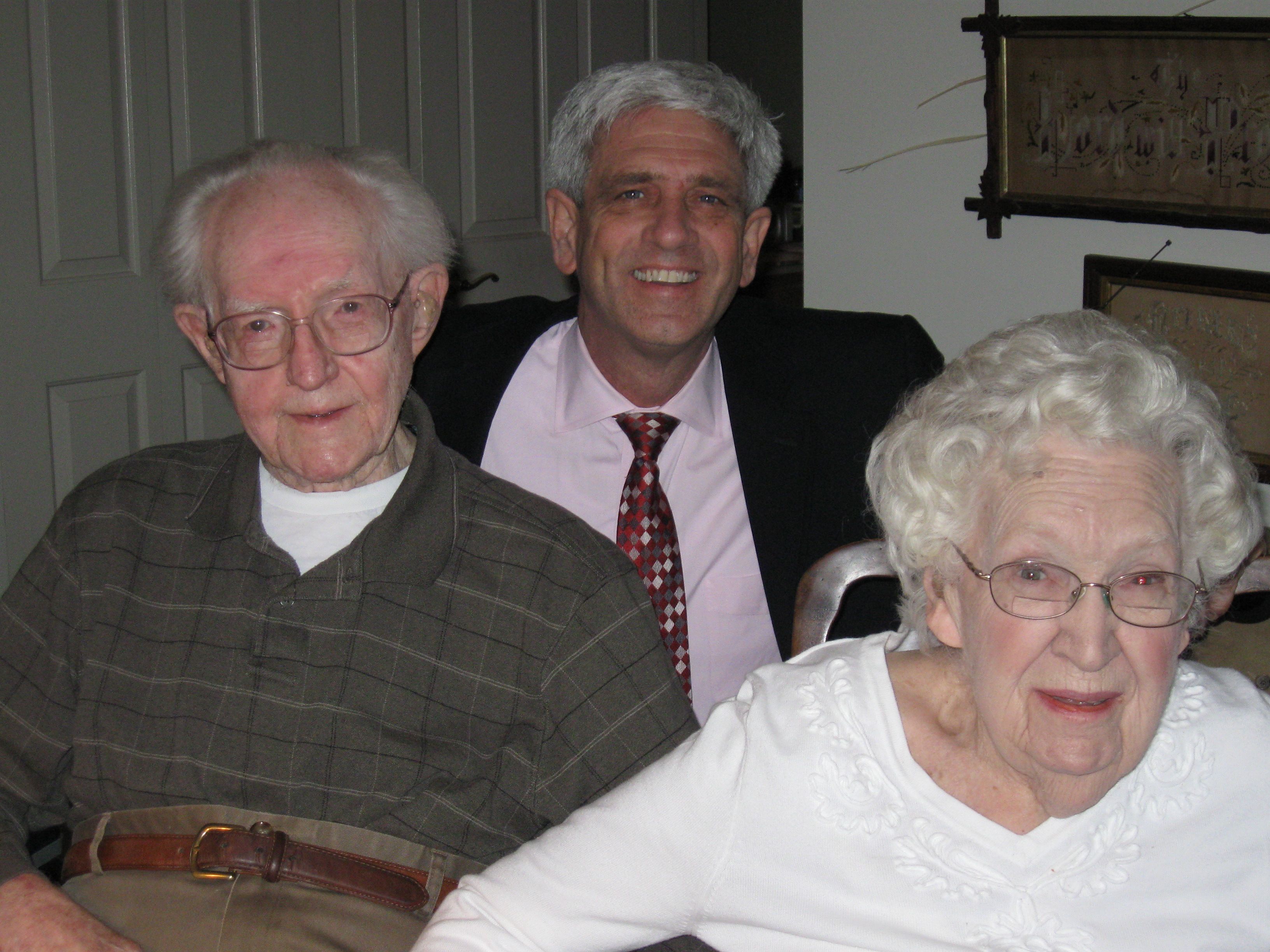
Jack and Harriet Gould welcomed me with a fine measure of midwestern hospitality. They showed me to my room where I was able to settle in and relax for the evening. I also met Jack’s brother, Don, who lives in the house on the other side of the driveway. Over the course of the next few days, I was able to piece together the interesting story that lay behind the gracious hospitality of my hosts.

Don and Jack grew up in Philadelphia. Don graduated from Penn State with a degree in animal husbandry and came out to Nebraska to farm. He was able to buy enough land to get started and began by growing and selling Christmas trees. Eventually he added cattle, and it was the cattle that for the rest of his career would serve as the centerpiece of his operation. Over the years he bought more land and rented the cropland out to others who had more of hankering for that side of farming.

Jack and Harriet were teachers. Early on, they out and spent the summers in Nebraska, Jack  helping out his older brother. Eventually Jack and Harriet moved out and built a house on the same land. After teaching for a few years (and coaching football for many more, as I understand it), Jack became a full-time partner in the cattle operation. After their two daughters started school, Harriet returned to teaching in Valparaiso and eventually became principal.

On the last day of my stay 6 of us sat around the breakfast table.  Let me add that the breakfast table was not merely breakfast, but a breakfast feast that bore a resemblance to a Thanksgiving feast. The table was set elegantly with china and crystal. Before breakfast each morning there was coffee and sweetbread as an “appetizer.”  Breakfast on Saturday was a scrumptious egg casserole and sausages wrapped in bacon (remember, this IS Nebraska!), fresh, warm biscuits and a giant bowl of fruit. Both mornings I was there, I had enough breakfast to skate right through lunch to dinner before I needed to eat again. But I digress.

Six strangers plus hosts, which makes 9, sitting at breakfast on that Saturday morning provided the setting for some stimulating conversation. Turns out Jack is deeply involved in Common Cause, a notational citizen’s lobby organization that works on behalf of citizens for open, honest, and accountable government. One of the guest’s father had been a Nebraska state senator who eventually turned to a career as a lobbyist. It was extraordinarily interesting to hear them share their stories about competing sides of the citizen/politician divide. She talked about how her family had been the recipient perks that comes along with a career in politics. Jack had spent much of his adult life working against those kinds of undue influences on the part of the corporate world.

On the morning I left, Jack and I stood in their kitchen and talked on and on about his work in Common Cause and my work as a pastor and leader in broad-based community organizing and the many intersections in our work. Though we have channeled our energies and commitments through different organizations, what we share is a passion that our country’s democracy work for common people. I left that B and B and that conversation with deep gratitude for the connections made and the relationships established with a few great salt-of-the-earth people who are shining the light into the dark corners of the world where they live.

I may never cross paths with the Goulds again. I hope we do. Even if we don’t, my life is better for having made their acquaintance.

So, you can take your chain hotels. And I’m sure I’ll spend many nights in them, too. But I still relish the chance for making the communal connections of staying in a B & B. And f you’re ever in northeast Nebraska and you need a place to stay for the night, give the Goulds a call. It’ll be much more than just a place to stay for the night.

I’m with Zeke

farmlandsunset

Zeke Emanuel has unleashed a bit of a stir with his recent article in The Atlantic Monthly, “Why I Hope to Die at 75.”  In just the past week, two responses to Emanuel have appeared in the Chicago Tribune, one by Mary Schmich, a regular Trib columnist and the other presenting an opposing view from a Chicago physician. My own posting of the link to the article on the Facebook page for clergy in my denomination generated a flurry of responses.

Manuel’s musings carry some weight. He’s the Chair of the Department of Medical Ethics and Health Policy at the University of Pennsylvania and was the founding chair of the Department of Bioethics at the National Institutes of Health until a few years ago. And besides it all, he’s an oncologist.

He makes a pretty strong and reasoned case for 75 years as a complete life. Even though there is loss for family when someone dies at that age, he writes, there is an equally compelling loss for living beyond that. (Really you should read the article.) I don’t think you have to agree with everything Emanuel argues to be grateful at way he has opened up and important and significant conversation. Emanuel labels our obsession with prolonging life, “The American immortal.” We snicker at the ancient Spanish explorers galavanting around the Americas searching for the fountain of youth; yet we have made their search look sane compared to the amount of money we spend to put off the inevitable. He writes, “I think this manic desperation to endlessly extend life is misguided and potentially destructive.”

I couldn’t agree more. As someone whose vocation is in part to help guide people spiritually through the end of their life and into the life beyond, I have seen the incredible burdens the denial of death places on persons and their families.

And it has often struck me in the middle of it all that we seem to pay only lip service to what is at the heart of our faith, namely, that the gift of life that we have here, while important and significant, is temporary, the down payment on a life that will last through our physical death. What does it mean, for instance, for Paul to write in his letter to Philippians, “For me to live is Christ, and to die is gain?” We’re happy to talk about the part about living in Christ now; but we act as if we don’t believe the part about dying as gain.

Even more troubling to me is the way we clutch on to this life with a white-knuckled grip. We seem to be willing to go to any expense, any trouble, and grasp at any thin hopes in order to prolong what we know rationally to be only temporary in the first place. Eastern religions have long suggested that we can only find happiness, fulfillment, and satisfaction in life by letting go, holding on loosely, if you will. And while this thematic thread hasn’t been emphasized in western Christianity, I wonder if it might be in part what Jesus was getting at when he said, “Whoever tries to keep their life will lose it, and whoever loses their life will preserve it.” (Luke 17:33)

I wonder further about how the notion of the stewardship of life plays into all this. Emanuel makes a glancing reference to the matter of stewardship when he talks about using up resources that might support the coming generation when we enter into costly treatment after treatment only to stave off for a time when we all know is inevitable. I think the matter of the financial cost of extraordinary medical treatment is worth thinking about, but I think it goes even deeper than that. The emotional energy required to care for the feeble and frail is staggering and often issues in both emotional and physical exhaustion. I ask again: for what purpose? To stave off for a time what we know is inevitable.

Some of the criticism of Emanuel has been of his equivalence of creativity and productivity with the worth and value of a life. What about relationships? Relationships give value and worth to people; relationships are important, enduring, and nurturing beyond physical and mental vitality. There’s no question about that.  Yet that’s only one side of the equation. These relationships, too, are only temporary; we talk about the persistence of relationships beyond death, though I’m not willing to say with precision what that means. At the least, it’s not necessary to put a one-sided value only on relationships this side of physical death as if that’s all there is.

Some of the negative reaction has been to point to examples of creative and productive life after 75. Emanuel doesn’t dispute that. Neither do I. What’s at issue is that at some point, all of us have to come to terms with this reality: our life is temporary; we are going to die. And to grapple with the question of the cost of prolonging life by medical intervention, often extensive and expensive medical intervention.

I’m prone to agree with the heart of Emanuel’s argument. I might argue about whether 75 is the age; maybe it’s 80 for me. More than that, I want to cultivate now the character of hanging on to this life loosely. I want to live it in gratitude, to steward well my physical, emotional, and intellectual health, to live in the vitality of good relationships with my family, friends and others whose accompaniment on this journey brings delight. I want to participate in the work God has given me and us toward the redemption and healing of the world. And I want to live every day in the knowledge that it’s temporary. When it’s over, I want simply to give thanks and live into the fulfillment that I cannot even imagine.

About ten years ago, I taught a several session adult forum at our congregation exploring the Christian theology of death. Through the course of those six weeks, we had some pretty amazing and candid conversations. There was something significant about opening a necessary and helpful conversation for which no one seems to want to break the ice. I’m glad Zeke Emanuel has given us another opening.

It’s All Connected

long-line

Last night on the local news, I heard a brief interview with a very articulate woman who works for a domestic abuse shelter. In commenting on the current swirl of media attention and the larger societal conversation about domestic violence brought on by the now infamous elevator video of Ray Rice and his then fiancé, she said she hoped this discussion was not just a moment in time, but that it might be the beginning of a long and focused movement that would reduce the tragic and violent incidence of domestic violence.

I hope she’s right. Really, I do. With her, I hope that domestic violence’s current place at center stage might move us forward not just in conversation, but in a broad change of behavior.

Still, I’m not optimistic that it will happen. We’re still not willing to have the more fundamental conversation about the paradoxical truth that we are a culture that at the same time glorifies violence and decries it. And as long as we want it both ways, we won’t make significant progress in curbing its tragic effects.

The NFL earns billions of dollars putting on a weekly gladiatorial spectacle. Huge, iron-strong men go flying at each other. The more violent the hit, the louder the cheers. Those men train for years to get to that pinnacle of their violent sport where they are paid lots of money to play a very violent game that people love to watch. We knew from experience that the culture within the NFL encourages uber-violence. Remember the scandal of the New Orleans Saints a few years ago, when it became public that bonuses were paid to a player who knocked an opposing player out of the game? And then we’re somehow surprised when some of the players — many of whom grew up surrounded by the very societal violence that we seem powerless to change —  are not able to make a clean separation between the violence on the field and their life off the field. Let me be clear: I’m not defending or excusing their off-the field violence. It’s deplorable. I’m just suggesting that it’s all connected. And we somehow seem to want it both ways.

Similarly, we are justifiably outraged and heartbroken when someone takes a large capacity automatic weapon into a school or a movie theater or a grocery store parking lot and opens fire. We can’t seem to figure out why someone would do that or how it can happen so often. Yet this is the same culture that is hellbent on preserving a dubious constitutional right to own military type guns that are manufactured for no other purpose than to kill people, to kill lots of them quickly and efficiently. And when a very few individuals are overcome with anger at society in general or act out of their own pain or mental illness, we are shocked and outraged. And when certain parts of our cities are war zones with innocents commonly caught in the crossfires, we wonder how this can happen. For a few days, we express our moral outrage.  All I’m suggesting is that it’s all connected. And we somehow seem to want it both ways.

Once again in the Middle East a new threat has risen that wants to impose its will with guns and bombs and tanks. I grant that this new threat is particularly violent and barbaric. Any rules about ethical engagement in war (if there is such a thing) and the protection of the innocent and civilian, seem totally to be ignored. We justifiably deplore their action.

At the same time, for much of my adult life, we have been trying to impose our national will in the Middle East with guns and bombs and tanks and soldiers on the ground. I still remember that summer evening in August 1990 when I was at church with my two young sons and I heard the news that we had begun bombing Iraq. I had just celebrated my 31st birthday. I’m now 54 and last week we began another initiative to drop bombs in the Middle East. We’ve been doing that for most of the intervening years. We are outraged when someone else drops bombs for their cause, when someone else kills innocents; but when we do it, we are able pretty easily able to make a case for why it’s necessary. All I’m suggesting is that it’s all connected and we somehow seem to want it both ways.

So, I’ll join you in outrage at the incidence of domestic violence in the NFL, and I’ll nod my head when you suggest that the league has been slow at best in responding appropriately. I will stand behind you supporting the notion that these players should be held fully accountable for their actions.

But if you want things really to begin to change, then look in the mirror. We’re all complicit. We both glorify violence and decry it. We can’t have it both ways. See, it’s all connected.

A Day for Remembering

9:11A few weeks ago, I noticed that one of our local fire stations had placed a large sign on their front lawn, emblazoned with an American flag and images of firefighters and fighter jets. One corner of the sign contained the only words:  “Never forget.”

So today, I remember.

It’s not enough, though, simply to remember. Remembering does no good unless accompanied also by a little reflection on exactly what we want to remember and why that’s a useful exercise. Only in that kind of reflection can we learn anything to carry forward.

Today, I remember that several thousand innocent American lives were lost. Families were torn apart, and the potential for good that resided in the hearts and minds of those people were lost forever. That is an unspeakable tragedy, and while I didn’t know any of them personally, I remember that their lives were lost and I’m sad. And while I’m at it, I remember that the tragic and sickening loss of innocent lives continues daily in places around the world.  The official count from the terrorist attacks on 9/11 was 2,996, and we still remember that loss of life with special commemorations even 13 years later. Meanwhile, according to Human Rights Watch, 2100 Palestinian civilians have been killed in Gaza this summer. In the five years of civil war in Syria, almost 57,000 civilians have lost their lives, almost 10,000 of them children. I wish we could harness some of the emotion loss of innocent American lives into at outrage at the daily loss of innocent life in other places in the world. It just makes me wonder how things might be different if we cared as much about them as we do about our own.

I remember that 343 emergency personnel — firefighters, police officers, and emergency medical personnel — lost their lives doing their job on 9/11. That, too, was part of the unspeakable tragedy of that day. They were just doing their jobs. While they all knew they had dangerous jobs, I’m guessing that most of them had no idea that the buildings they rushed into would become their graves. So, today, I not only remember them, but remember those in my own community who work at those dangerous jobs protecting the rest of us from crime and fire and weather and who respond to our health crises and then rush us to the hospital, in many cases keeping us from crossing that narrow line between life and death.

Today, I remember that since 9/11, our country has been embroiled in multiple wartime engagements in the middle east; we still have troops on the ground and men and women losing their lives in Afghanistan. And in the past few weeks, our engagement has been ramped up in Iraq. Today, I don’t intend today to debate whether that’s a good thing or not. But I do remember today that in addition to the 3000 killed on 9/11, to date over 6800 American soldiers have lost their lives in Iraq and Afghanistan. And the threat of terrorism is as great today as it has been, especially with the rapid growth and terror of ISIS in northeastern Iraq and western Syria.

This Sunday in our congregation, we will sing a hymn that includes these words:

Oh, praise the tide of grace,
that laps at ev’ry shore
with visions of a world at peace,
no longer bled by war.  (Thomas Troeger)

So, among all the things I remember today, I want to remember a future where we figure out a better way. And in the hope that such a vision be realized, I will both pray and work for peace.

That Thing Like Taxes

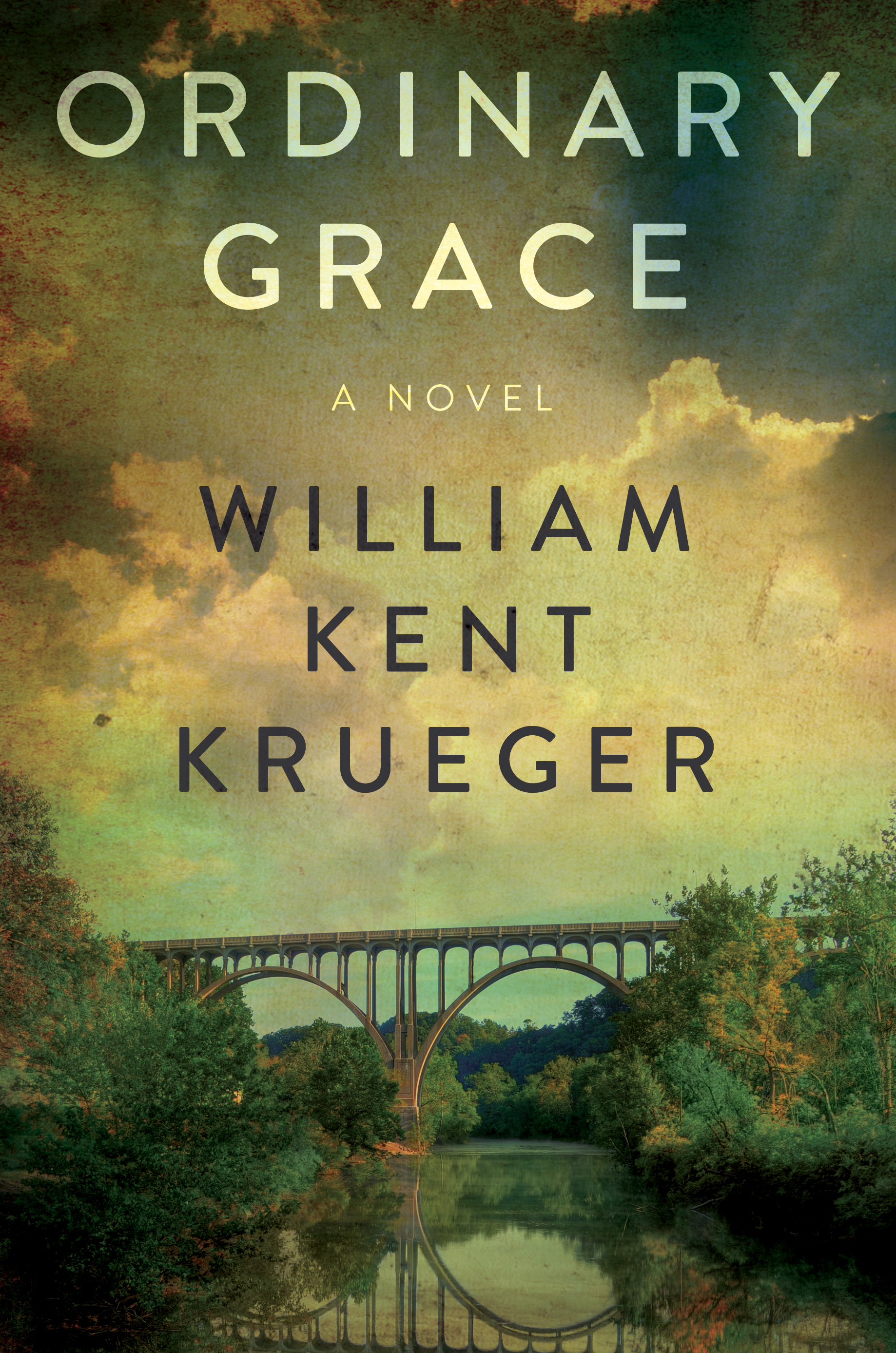
or a long introductory essay and a short review of William Kent Krueger’s novel, Ordinary Grace

ordinary grace coverI didn’t have an up close and personal brush with death until I was out of the seminary and in the parish for a couple of years. As a young adult, my parents, siblings, aunts and uncles, even all but one of my my grandparents were still living and he died when I was an infant.

Linda was a church member, a colleague, a kind-hearted soul who appropriately mothered my wife and me as we left school and entered “the real world.” We first met her as our real estate agent. We didn’t have a lot of money and my salary wasn’t going to be great, but at the suggestion of the senior pastor, we asked Linda to show us around and see what might be possible. With a positive, hopeful, and eminently practical frame of mind, Linda set out to show us what we could afford, and within weeks helped us buy our first home.

After that, I knew her as Sunday School superintendent, organized to the hilt, yet so tuned into the needs of the kids and the teachers. She and her husband attended church every week, and over the course of that first year, we also got to meet several of her five grown children. They all adored her; what I saw of Linda’s marriage was a couple still starry-eyed in love.

When she was first diagnosed with lung cancer, she almost brushed it off; just a couple of spots, she said. The doctors weren’t worried. But over the course of the next year, the disease proved to be extraordinarily virile. None of the chemotherapy had any impact, and the cancer multiplied and spread.

What made it so inexplicable was that Linda had none of the risk factors. She was born and raised a teetotaling Baptist. She didn’t drink and had never smoked. She exercised, watched what she ate, and was the picture of health.

She was home when she died, under the care of hospice. Maybe because I had visited so often those last weeks, I got the call early one morning that she had died. “Could I come?” her husband asked. When I got there, Linda was still in bed, her family gathered around; her youngest son who had just graduated from college, sat in bed with his mother in his arms rocking her and sobbing.

It was the first time I grieved the death of someone with whom I had had such a close relationship. It was hard and it was eye-opening. It wasn’t just the sadness of loss. It was the first time I experienced so personally what felt like the injustice and arbitrariness of death. Linda still had years to live and much to contribute. She was one of those people who made her corner of the world a better place. Her death didn’t fit into my comfortable, rational categories of how things were supposed to work out.

In the parish I serve, we average a little more than funeral a month. Most of them are not tragic in the sense of unexpected or untimely. They are sad; they represent loss; they bring folks face to face with the reality most of us work hard at denying, that is, we are mortal. Over the years, I’ve witnessed firsthand the broad spectrum of the ways people deal with death. I remember one woman with cancer who up until the very end was convinced there would be a miraculous cure. She forbad her family from talking of any other outcome. That was pretty hard-core denial. Other times, I have experienced the calm peace that can accompany death, standing with family around the bedside of the dying, singing hymns, praying, telling stories, and laughing the loved one across the river.  Some people draw strength from their faith, from their relationship with God, and from the promises of life in the midst of death. Others find in the sometimes sudden intrusion and finality of death their faith shaken to it’s core and can do nothing other than shake their fist at God for what feels like abandonment and capriciousness.

William Kent Krueger’s novel, Ordinary Grace is a beautiful, poignant story of life and the reality of death. The narrator is a grown man who tells the story, looking back on the summer of his 13th year, “a summer in which death, in visitation, assumed many forms. . .You might think I remember that summer as tragic and I do but not completely so.”

That narrator, Frank, is the wild son of the local Methodist preacher. The story opens with the report of the death of a classmate of Frank’s; it isn’t long before the reader is in the sanctuary where Franks’s father is conducting the funeral service for Bobby Cole. That same church and that very sanctuary become an anchor for the unfolding of the story.

In a sense, the story reads like a who-done-it, except without a detective. Mystery surrounds many of the deaths, and it’s to Krueger’s credit that you never quite know exactly how the deaths happened; accident? murder? something in between? The small, fictional Minnesota town is populated with enough odd yet believable characters that the reader ends up speculating along with the narrator about the whos and the hows of the series of deaths.

Where I think Krueger’s writing borders on the brilliant is the believable way he paints the variety of reactions to death. He allows for each of the characters, the families, and indeed, the town itself, to grow through the experience of loss to emerge on the other side of grief as someone different and wiser than before.

The story is, in fact, a long illustration of the quotation from the ancient Greek playwright, Aeschylus, a quotation that bookends the novel:  “He who learns must suffer. And even in our sleep pain, which cannot forget, falls drop by drop upon our heart, until, in our own despair, against our will, comes wisdom through the awful grace of God.”

Awful isn’t a word I often associate with grace. But this story has been yet another invitation to reflect on my own losses, struggles, pains, troubles, and sorrows. What I have experienced has been verified in the experience of others, namely that those times of suffering and pain have been transformational. And yes, brother Aeschylus, the places from which spring the fountain of wisdom.

Reflections on a Church Picnic

picnic2To look at the event from the outside, it didn’t look like anything very special. It was a church picnic. We grilled some hamburgers, brats, and hotdogs. We planned some activities. We brought some food to share.  In fact, to look at the event from the perspective of the weather, its kind of surprising that anyone showed up at all. In the time leading up the the publicized starting time, the skies looked ominous, and there were sprinkles. It looked so threatening that at the last minute, we decided to move the tables for eating into the building. We bought meat to grill for 100 people, and we began to wonder if there would be 25.

O ye of little faith.

They came, they came, and they kept coming. By the time we finished cooking (and a quick trip to the nearby supermarket to replenish the repast), almost 150 came. The energy in the room was high. The conversation was exuberant. The crowd spilled out the doors of the building out onto the patio where, even though no tables were set up, folks found a place to sit, eat, and enjoy each other’s company.

And it wasn’t just one group in the congregation that came. People who have been members for 40 years came and people have been here less than a year came. The young, the old, the greatest generation, the millenials, families with kids, couples with no kids. It was an astonishing mosaic of the people of Faith.

What happened after dinner was even more amazing. We wanted to get together for no other purpose than to celebrate God’s presence and action in our congregation. So, the plan was to have fun and play. When it was time to play, we invited everyone out onto the lawn and got them in a circle. We played a silly game that invited people into saying silly words and doing silly actions. People did it! The laughter and silliness going around that circle became infectious. Even those who didn’t join in the game began to draw in close just to watch and vicariously join in the antics.

After the circle game, the game leader invited us to find a partner — someone not the same age as you, he said. My partner was Avery, a rambunctious first grader (give or take) who had written on his name tag, “The Mayor.”  So, upon the direction of the game leaders, The Mayor and I got into the parallel lines facing each other when they began handing out the water balloons and the raw eggs. Yep, we did that. The luck of the draw gave The Mayor and me an egg which we proceeded to toss back and forth. The Mayor was astonishingly lucky; I don’t think he caught the egg once, but the soft grass kept on preserving the egg. Until it cracked on one of those tumbles into the grass and then broke when he tossed it back to me! But no worries, it gave me a chance to stand back and watch the remarkable thing that was happening as the young and old embraced this play together.

After the games, we formed a new assembly on the driveway. One of our staff members climbed a step ladder and feigned a game of Simon Says. In reality, was teaching the crowd a series of dance steps. By the time she made the reveal, everyone was having too much fun to opt out.  Yep, we did that, too. We danced on the driveway. Pherrel’s Happy blaring in the background. We wouldn’t win any dance competitions, but did we ever have fun.

Yhttp://www.youtube.com/watch?v=u-TUJKd1Szc

A few things have stayed with me in these days since that gathering. We probably don’t get together enough for no reason. Most of the time we invite folks together, there’s an agenda: we’re celebrating the arrival or leaving of a pastor, we have business to do, we need to ask for money, there’s something we want people to learn, there’s music to listen to or a new program to introduce. In this case, we invited people to come together and explicitly told them, “We are getting together for no other reason than to celebrate God’s presence and activity among us and to enjoy one another’s company.” And those who gathered embraced that agenda with extraordinary enthusiasm.

At one point, I stepped back from the circle of silliness and just watched. I became choked with emotion as I began to wonder, “Where else does this happen?” Where else will you find the young and old and everyone in between, people who are not bound to each other by family ties, engaging in that very necessary human activity of play? Yes, in our culture we play softball and futbol and basketball, but that’s very different. Those are competitive activities that require some skill. We were playing together in non-competitive, no-skill-required fun that was packed with silliness besides. There’s something to be said for that, and we’d probably all be better off were we to do it more often.

We, like almost every congregation I know, want to build genuine community. But that’s an elusive thing. I don’t think there’s a formula to it. By definition, community can’t be done casually or superficially. And it’s different than hospitality. It includes welcoming each other and the stranger, but it’s more than that. We work at it; we think about how it can happen. Sometimes it feels like we’re making progress; sometimes, I wonder. While I’m not sure why this particular event worked so well, I think we got some glimpses of what true community is like. And at something as simple as a church picnic. Go figure.

I Love Worship. . .and I’m Not Right

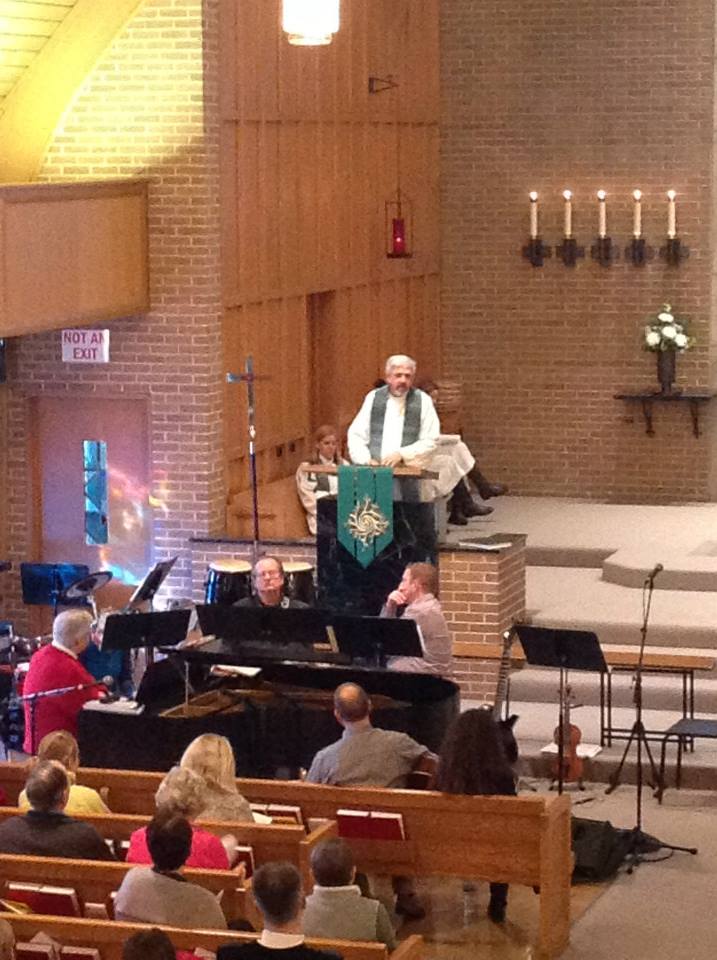
jim at worship
During a recent lunch with a colleague, the conversation turned to a decision they had made at their church to change to a different system of readings for their Sunday morning services. We’re not doing that at the church that I serve. And we had a really rich and stimulating conversation about the matter. It was a reminder to me of the marvelous diversity of the denomination in which I serve, the Evangelical Lutheran Church in America. What an astonishing collection of congregations, individuals, and pastors.

A plethora of Pentecost postings on Facebook last week was another reminder of the rich spectrum of worship practices, pieties, and sensibilities. There are regional differences, ethnic differences, local differences, even differences based on where the pastor went to seminary and the places he or she has been since seminary. I can’t imagine that you could find even two congregations among the almost ten thousand congregations where everything is done precisely the same on any given Sunday morning.

That doesn’t mean to say I don’t have opinions about how things should be done. I do. And I think I have pretty good reasons for most of what we do and why we have made the decisions we have where I serve. I’m even willing to articulate the reasons for those decisions and enter in to conversation around them. Still, it would be arrogant and presumptuous of me to try to prescribe our way as the right way, with the assumption that other ways are the wrong way. Since the beginning of Christianity, worship has been a long process of evolution and it continues to evolve.  It would be better for all of us if we could leave behind the notions of right and wrong about worship practice.

The wonderful diversity of practice also doesn’t mean that everyone gets to do whatever he or she wants, including me. Worship is always about God and who God is and what God has done and how God comes to us in the Gospel of the risen crucified one in whom we have life. Whatever our practices, it should be clear that they point to, and indeed communicate the one gospel, and that our practices become locations for the presence of the risen crucified one and for the faith that comes to birth through him.

That very Gospel becomes also a reforming force for worship, so says Gordon Lathrop in Four Gospels on Sunday.* The very presence of the gospels, and through the gospels the presence of Christ in the assembly, constantly calls us back from worship that is rooted in ourselves, our perceived needs and desires, our drive for control, our knack for falling into the kind of lifeless behavior that aims at nothing more than perpetuating institutions.

In the end, I guess I’m not trying to convince anyone of anything except a couple of very basic suppositions: that there isn’t a right and wrong way to worship, even for those of us anchored to a tradition. And that whatever we do, at the center is the life-giving gospel of the risen crucified One. Really, I think I’m writing this for my own benefit as much as anyone else’s. I need to be reminded constantly in my work as pastor and leader of worship that it’s not about me or my congregation or what we like or don’t like; it’s not about numbers or statistics or coddling the insider or wooing the outsider. It’s about the God who has come near to us in Jesus Christ, who loves us with a love that will not end, and who forms us and shapes us by the presence of the Word in our assembly so that God can send us out, empowered by the Spirit, to enact God’s intentions for the world.

*I’d highly recommend this book for the clergy types out there. While Lathrop is a noted liturgical theologian, it’s clear in this book that he began as a New Testament scholar. His sharp interpretive skills are on keen display in this work, especially as he nuances the different thematic schemas of each of the four gospels and the implications for worship.

Spare Me Your Pious Facebook Sentiments

nogunsI’m going to start by saying that my heart is heavy with yet one more school shooting, this one at a high school in Oregon. It should not be this way. There are way too many of these happening. I was shocked to hear on the NBC Nightly news that there have been 74 school shootings since Sandy Hook. That’s astonishing. I would have guessed half that. Simply shocking.

It’s way too many. No one disagrees with that.

But I’m tired of reading Facebook posts about how upset folks are about this. “Lord, have mercy.” “When will this stop?” “Jesus weeps over this.” “This is beyond tragic.” “When will this end?”, blah, blah, blah.

I don’t disagree with the sentiment.

But it’s too easy. It’s too comfortable. To say something that gives the impression that I care allows me to keep it all at arm’s length.

Just what good do you think it does to post pious platitudes on Facebook? Or do you just feel better doing that?

I don’t really care how much you care. I want to know what you’re doing about it.

In my experience, we are doing precious little in terms of action. (My apologies to those of you who are actually doing something.)

Here are a few suggestions.

  • Get informed. And you might begin by reading James Atwood’s America and Its Guns: A Theological Expose. Atwood is a Presbyterian pastor who has lived what he believes. He has done his research. His work is compelling.
  • Break your silence. Talk about it. You don’t have to be strident. You can simply be conversational. Ask people what they think. Be respectful. Look for opportunities to share a contrary view respectfully.
  • If you are clergy, make some opportunities for people to hear about the issue from a personal standpoint. Schedule an adult forum where the speaker is a victim of gun violence. Foster a discussion with open-ended questions so that there is a safe place for divergent opinions. I believe there is power in the simple act of conversation.
  • Don’t let people tell you that the second amendment is all about the right of personal ownership of guns. I know that’s the mantra. As with the scriptures, the Bill of Rights is a document that gets interpreted. I’m puzzled as to why we have allowed the reactionary voices to define what the second amendment means. It’s been a long time since we have had anything resembling the citizen militias of the late 18th century. In fact, as far as I can tell, it’s been since the late 18th century.
  • I’m not a big fan of preaching about controversial topics from the pulpit. Seems too much like a power thing to me. I get to say what I think and no one else gets a voice. But I am a huge proponent of preaching the values of God’s kingdom and letting people make their decisions. So, preach it, pastors! How God is a God of life and not death. How vengeance belongs to God. How the eye for and eye and a tooth for a tooth ethic has been supplanted. How we are called to care for our neighbor, not fear them.
  • Defy those who would make safety and security the ultimate good. It’s a god that we have been all to ready to worship, even at the expense of our own freedoms and our calling to love our neighbor. Security is not the ultimate good. The whole notion of safety and security and the right to defend ourselves has become a god in American culture and no one is allowed to question it. Question it.

And please, don’t waste your time writing to your congressional representatives. It does no good. For what reason do you think that your voice unaccompanied by any campaign contribution will make a hair’s breadth of a difference in opposition to the millions contributed by the gun lobby?

Honestly, I don’t know what will make a difference. I do know beyond a shadow of a doubt that it will not be the proliferation of platitudes.

By contrast here are things that I know to be true. That  solutions begins by naming the problems, not be feeling bad about them. That powerful things can happen if people have the courage to talk about them. That when people join together in common cause, amazing things can happen. It’s time for us to give up on pious sentiment and lock arms and actually make this evil go away.

In Memoriam: Faye Kiser

kiser

In February, 2013, I wrote a blog post chronically the plight of one of our member couples who, in their 90s, were forced to move from one retirement center to another an hour away from their community, and all because their money was running out. 

Things Don’t Always Work Out

Paul died in April, 2013. Faye died on Memorial Day this year. The following is the sermon I preached at her memorial service yesterday.

As I’ve reflected over the past couple of weeks on Faye and on her life and on what became over the past dozen years a very special and unique relationship between a pastor and a parishioner, what has come to my mind so often is an old liturgical verse that my friend, Mark Mummert, has set to music.

(Sung:)  All of us go down to the dust; yet even at the grave we make our song. Alleluia! Alleluia! Alleluia! Alleluia!!

When I came here in 2002, Faye was already 83 and while still vibrant, still very active, still working, the signs of death and decay had set in. Her beloved Paul had already begun his long struggle with dementia. For Faye, this meant an extra level of care, care about which she was the very model of love and faithfulness. Years later, she faced the reality of leaving their home and independent living. It was an agonizing decision that her head told her was right and her heart resisted with every fiber of its being. In the end, she decided that she and Paul would leave their home on Vine Street and move to The Meadows. It was so hard because Faye loved that house and she loved that neighborhood and she loved her neighbors. And of course, she loved that it was so close to Starbucks.

Then there was Robert’s death to cancer (he died in his mid 60s), a death that hit Faye very hard. Finally came the move to Alden and Paul’s death a little over a year ago.

. . .yet even at the grave, we make our song.

The way Faye lived was almost as if to defy death and to push death away. There was, for instance, that regular, everyday 3:00 ritual of the drive to Starbucks for a cup for coffee and a pastry.

When they moved to The Meadows, Faye could not have her home, but she was determined that their small living room would retain as much of the character of their home as possible. She had brought along a few of their best living room and dining room furniture and it was tastefully adorned with a few sentimental pieces and framed photographs. When I came to visit, she was always dressed up as if the President was visiting. She was a dignified and  classy lady.

Just before the service today, I was saying to Ken (surviving son) how fitting it was that this service is in this room. She loved this place; she loved this room. She would bring Paul to church every Sunday. She loved the services, the music, the preaching, the liturgy, but she loved just as much the opportunity to be around people, to bask in the love and care of those relationships that had been formed and cemented over decades of being a part of the same faith community.

And there was our Thursday morning bible study. In think in the beginning, she brought Paul because he had been the one to relish bible study. When I first came to Faith, there were two Thursday morning bible studies, one for the men and one for the women. If I remember correctly, she used to drop Paul off, do some errands, and then come back an hour later to pick him up. But then when we combined the two groups, she stayed and sat next to Paul, helping him find the passages and so on. At least in the beginning, she was just along for the ride. But that time and that study became extraordinarily important to Faye, and our time together in bible study fostered some very rich and meaningful conversation about God and faith and the church and life in this world and about death and what comes next. These were honest and rich conversations. They became the basis for a deep and meaningful relationship.

Faye was smart; she was strong; she was classy; she was elegant. And she was full of spunk. She loved her Paul with a devotion that I have rarely witnessed. She loved her sons and her daughters-in-law and her grandchildren and extended family. She deeply loved her church and her friends there. How often did I hear stories about the 4th Nighters? She loved Glen Ellyn. She should have worked for the Chamber of Commerce. Maybe part of that was that she loved the roots that she and Paul had put down here. She loved her work and all the relationships she build through that work.

See, even in the midst of all the struggles and the slow approach of the grave, Faye loved life. She was grateful for the good life that she and Paul had had. She simply love life. She loved life as an Easter person would love life. Faye’s song was Alleluia!

We used to talk about death and about what happens after death. Those conversations happened first in the days after Bob’s death and then again after Paul died. Faye could never quite accept the Sunday School notions of heaven with jewel-studded mansions and streets paved with gold. What she took great comfort in was the notion of life. Because she loved life so much, the prospect of a new and rich and eternal life with God brought great comfort. It’s the kind of life described in the lesson we read from the Revelation of John. (One of the texts for the memorial service was Revelation 22:1-5.)

John paints a picture that is far too often taken as a literal description of heaven, a misunderstanding, I believe, of the purpose and intent of that vision. Instead, John gives us a sense of what this new and eternal life will be like. It will be full. It will be refreshing. It will be the laying down of burdens and disappointments and sorrows and regrets and pain. There will be healing, not just for the physical ailments that characterize our long, slow slide into the grave, but healing of all that has ever stood as an obstacle in our relationship with God and with each other. Everything accursed will be no more.

And we will see God. And we will see God. And we will see God.

And we will bask in the everlasting light of Christ, the One who came to show us God. The One who came to bring us God’s love and grace and mercy. The One who knows us as only the Good Shepherd knows us. (The gospel lesson was John 10:11-18.) The One who carried our burdens and our sins to the cross and then buried them in that garden tomb. The One who rose again as the assurance that neither is our grave, neither is Faye’s grave, the end of the story. That One, that One, invites us, as he has invited Faye, to bask in his light and enjoy that life that will not end.

And, so, Death, Grave: you are not the end of the story. Death, Grave: you are not the last word. Alleluia is the end of the story; alleluia is the last word.

(Sung:) All of us go down to the dust, yet even at the grave, we make our song. Alleluia! Alleluia! Alleluia! Alleluia.