Author Archives: Jim Honig

Unknown's avatar

About Jim Honig

Lutheran pastor in the western suburbs of Chicago. I'm a writer, a runner, an avid outdoorsman, and a curious student of people and the human condition.

When Friendship Is Not the Thing

friends.jpegI suppose I’m not surprised that so much of the blogosphere and Facebook chatter about race has died down. I suspect it’s symptomatic of our short attention span. If it’s not in the news, then there’s no need to think about it anymore.

Except that there is. In the lively social media conversation a couple of months ago, there were several threads to the conversation that had to do with the notion that most white people don’t have any black friends. The implication seemed to be that white people should go out and make some friends who are black.

While I’m certainly not opposed to friendship, I think the notion is a red herring.

While my experience doesn’t need to be emblematic of anyone else’s, it’s the only experience I can speak of with any authority. In the first place, I don’t have many friends period. White or black. I am not the kind of person who cultivates a large number of social friends. I don’t go to a lot of parties. My social contacts are to a great extent the people of my congregation, and while I am friendly with them, and have a good relationship with many of them, they are not my friends.

I am also in a vocation where nurturing friendships is not particularly easy. I’m a pastor. My schedule doesn’t match the schedule of much of the world around me. I mostly work weekends, and when I do have some time on Saturday, it’s spent catching up on domestic chores that I’ve ignored all week. I don’t like to go out on Saturday night because I’m preoccupied with Sunday morning.  My day off is Friday, when most folks are working. And I often end up working two or three evenings a week. That’s why over the years, the few friendships that I have cultivated have been mostly other clergy. Our schedules mesh. It’s easy for us to find time for coffee in the middle of the morning or the afternoon or even an occasion for a late afternoon beer before heading home for dinner and another evening meeting.

Having said all that, though, I think friendship across racial lines is not necessarily what’s needed. What’s needed is public relationships across racial lines and all the other lines that tend to divide us: religious, political, socio-economic, and on and on. What we need, what I need, what the world needs is people who are willing to sit down and get to know what the Other cares about, is passionate about, lies awake at night worrying about. If racism is going to be addressed in any meaningful way in our communities, then we have to do the relational work that will make a difference in the long run.

I don’t know what it’s like to live as a black man in the western suburbs of Chicago. How could I? So, I also don’t know what’s needed or what actions on my part or on the part of the faith community I serve might be helpful. So, rather than take a stab in the dark or engage in action that is merely symbolic, I reach out.

I sit down and talk about the issues of racism and interactions with police and what it’s like to live as a person of color out here. I sit down as a pastor with members of my congregation who are African-American or Hispanic or refugee or gay or poor or any of the other boundaries that separate me from them. I reach out to my clergy colleagues across the boundaries of what makes us different. I sit down across the coffee shop table from them with an inherent curiosity and ask questions and listen. I ask them who else I should be talking to. And I encourage and challenge the members of my congregation to do the same thing.

When we do that enough times, not only are we building meaningful relationships, we discover that certain themes begin to emerge. Now we are positioned for meaningful action that just might get something done instead of the often symbolic flash in the pan action that gets some attention and then dies as if nothing at all had happened.

When enough of those conversations happen, when enough people begin to listen to one another across the lines that divide us, when we can agree on mutual action that will begin to lift some of the burdens that our brothers and sisters carry simply by virtue of the color of their skin, then we will begin to make meaningful progress towards communities where what happened to Michael Brown and Eric Garner will not be repeated over and over again.

I’m not whistling in the wind here. This is not theoretical. This is work that I do and that the community I serve does and it’s work that is bearing fruit. But it’s slow, plodding, time-consuming work. It’s work that requires a persistent, determined, and disciplined effort. And it seems like it’s not the kind of work that very many people have the appetite for in an instant gratification culture. It’s the kind of work that will draw no TV cameras, will elicit no requests for comments for a newspaper article, nor probably is it the kind of work that one can ever post to Facebook or tweet about.

But it may be the only kind of work that will really make a difference.

Thank You for Reading. No, Really. Thank You.

Screen Shot 2014-12-31 at 11.27.52 AMThank you, dear reader. Whoever you are, wherever you are, thank you for reading what I write.

If you’re short on time, that’s the punchline, and you can stop right here. That’s where this whole essay is headed. If you’re curious how I got there, read on.

One of the things that separates the human specie from the rest of the animal world is the consciousness of more than the present moment. We look back on the past, we make plans for the future, even as we experience the present moment. My dogs don’t do that. Maybe it’s what makes them seem so happy all the time. They are simply experiencing the joy of the moment.

I suppose our human sense of time is such an obvious piece of information that it hardly bears stating. I read about it recently in a book I’m reading on brain science, and I find myself on this New Year’s Eve reflecting about the past year and so, today, it is for me a valuable insight.

Comments I’ve read and heard from a variety of media sources are labeling 2014 as an awful year. Last Saturday on “Wait Wait. . .” Peter Segal suggested that 2014 should be the year about which we say, “Good-bye and good riddance.”  According to the AP, some of the top news stories of 2014 included the police shootings and the ramping up of racial tensions, the emergence of ISIS and the continuing violence in the Middle East, the loss of the Malaysian airliner (and now another plan crash in that part of the world), the NFL controversy around domestic violence, the ebola outbreak in west Africa, the extraordinarily contentious election cycle, and the tensions in The Ukraine, including the shooting down of the passenger plane last summer. Maybe it has been a year that we simply want to put in our rearview mirror.

For me, it’s been a good year. At the church I serve, a couple of losses of staff — one due to taking an assignment elsewhere, and the other a sudden death — led to a prominent sense of loss and grief. Yet, as we emerge from the grief, I find that the losses have given us a renewed sense of our ministry as a congregation. We have been given a golden opportunity to spend some time in discernment about what God is calling us to be as a congregation, and about how we do our work in the world. In the past 3 months, I’m feeling more energized and engaged in pastoral ministry than maybe I ever have.

With regard to my writing, it’s been a year of contrasts. I got the report from WordPress, the platform that hosts by blog, that I posted 28 times in 2014. That’s just over 2 times a month, far less than I had hoped for when I entered the year. Part of that is due, I suppose to the events that I described above. The losses of staff members required much more of my time and attention in the short-term than I planned for. And, of course, I don’t regret making that investment. As much as writing is necessary for me to do, my primary calling is still “pastor.” I’ve also been much more disciplined in working on my fiction which leaves less time for other writing.

As those of you who read this blog regularly already know, the subject matter for my blogging is all over the landscape, and has to do, I suppose with what I’m interested in in the moment. Blogging experts say find your niche and stick to it. But that’s not how I am. I’m not interested in one thing. I’m interested in the world and how I am in the world and how we are in the world. That inevitably leads to my reflections going all over the place. One of my most read blog posts of the year happened to be a review of a bed and breakfast I stayed at in Nebraska; someone from the bed and breakfast world read it and soon B&B proprietors from all over the place were reading it. I doubt they will be regular readers, but I’m grateful to have had the opportunity to say a kind and supportive word to them.

As I look back, it looks like what I am most interested in is how people of faith — Christians, in particular — take concrete action to work with God to accomplish God’s healing and redemptive intentions for the good world that God has created and still cares about.

What I’ve been trying to get to in this long end-of-year reflection is a word of thanks to those of you who take the time to read what I write. I’m grateful and humbled that of all the things clamoring for your attention, you would choose to invest a precious bit of that attention to some thoughts to which I have attempted to give cogent expression. I write because I need to. I need to put on paper some of the many things that rumble around in my mind; I need also to put them on paper because it forces me to clarify and remove the fuzziness of some of those thoughts. Knowing that someone else is going to read them forces me to be accountable for those thoughts. While I write for myself, I also write because I want others to read. I guess it’s an ego thing, but I like knowing that someone else is reading it. Even as I say I like that, I am sometimes amazed by it. As much as I try to tame them, I still face the demons that tell me I have nothing to say, that no one will be interested in what I’m thinking about, and that I haven’t had an original thought in years, if ever. On my better days, I can shout the demons down and live in gratitude for the miracle of language and expression and that by simply placing some characters on a page others can have some reasonable facsimile of what I am thinking and that together, the dialogue might move us all a little further along on the journey.

So, as I said before, thank you, dear reader. Whoever you are, wherever you are, thank you for reading what I write.

Changing the World

SchmaltzIf you were to look at the room and just sit back and watch, you might conclude that nothing extraordinary was taking place. A bunch of guys. Many of them wearing Bears jerseys. Monday night and the local team was on the TV.  A small deli, food out on the table, and and grocery bags of BYObeer.  Animated, even robust conversation. It looked like these guys had been doing this for years.

Except they hadn’t. In fact, for many of them, it was the first time they had seen or talked with one another. The chill of unfamiliarity that might have hung in the air at the beginning of the evening was quickly replaced by the warmth of interaction, even if they didn’t know each other.

What I’m describing is a first ever fellowship event between some of the men of the congregation I serve and the more organized men’s group — a group they call officially The Brotherhood — at the nearby synagogue, Congregation Etz Chaim.

Last night grew out of a community solidarity event that the synagogue hosted about 6 weeks ago, after they had experienced some vandalism in which the perpetrator was charged with a hate crime. That solidarity event was so meaningful for the members at Congregation Etz Chaim, that the president of the Brotherhood went to his rabbi and said, in effect, “This can’t be one-time shot. We’ve got to figure out how to nurture these relationships and make them permanent.”  So, Rabbi Bob reached out to me. “Do you have a men’s group? Our men’s group would like to invite your men’s group to get together; no agenda. Just fellowship and getting to know one another.”

I’m not sure anyone knew if this was going to work. I think a lot of us were a bit nervous. Since our men’s group is at best loosely organized, I wondered if anyone from Faith would show up (I know, I should have more confidence in my people!). I wondered if there would be the kind of mingling and conversation that the organizers of the event hoped there would be. And I think the first half-hour bore out the playful nervousness of folks, almost like the nervousness of the first middle school dance of the year. But eventually, the guys began to grab plates of food (unbelievably great food!!) and a bottle of beer. Small groups of men from both congregations began to gather around the tables while others stood one on one, talking to their counterparts. By the time the night was over, the bonds had been formed and I don’t think anyone was in a hurry to leave. It felt like they had been doing this for years. Ted, the president of The Brotherhood remarked to me as I was leaving, “We’ve got to do this again.”

What I think is most remarkable about what happened last night is that it happened at all. This is just not what we do. We stay with our own. We don’t move out of our familiar and comfortable worlds inhabited by people who are just like us; and we don’t often tend to relationships with them. Now, of course, the men in that room were in most ways more like each other than not. They were all residents of the western suburbs of Chicago, all white, and mostly educated, I suspect. But in that setting, all of them were also sharply defined by their religious affiliation, and for them to bring their religious identity into a room of strangers who were identified by an entirely different religious affiliation, and to do it for no other reason than to hang out together and to foster relationship with one another, is remarkable.

Isaiah’s vision of the kingdom of God is that the lion will lie down with the lamb. Sometimes I think it will be easier for the lion to lie down with the lamb than for 21st century American Christians to sit down with anyone who is the “other.” That’s what happened last night. A bunch of guys. Some good food. A football game on the television that was virtually ignored. And people who had walked off their turf to meet the “other” on common ground for the sake of tending to their common humanity.

You can tell me that I’m making too big a deal out of this. That it’s not going to change the world. Except that I think it is a big deal. And last night the world began to change.

Just Don’t Confuse Protest with Action

In about 40 minutes, this blog post will probably be totally irrelevant. Everyone’s focus will be on the specifics of the grand jury announcement in Ferguson, Missouri and the specifics of the aftermath. It will be great, grand, dramatic, sensational news.

Which is why I feel some inner compulsion to write it before the announcement.

My Facebook feed today has been replete with announcements of protests. Usually there’s a caveat that says “we’re gathering regardless of which way the announcement goes.” To which I say, “Well, then, what are you protesting?”

Good. Go ahead and protest. We have a long history of exercising our first amendment rights to free speech and to peaceable assembly. And in our history, many courageous people have exercised those rights at the risk of great bodily harm.

So, go ahead and protest. Just don’t equate your protest with action.

Action requires much more than protest. Does anyone remember the Occupy Wall Street Movement? Tell me what it accomplished. There was some press. The issues of economic division were highlighted. But has any progress been made towards the divide between the rich and the poor as a result of the Occupy Movement. Show me the goods.

Protest is a function of rage. When we act out of rage, the fundamental anger gets channeled into the belief that we have to do something. Get out there. Walk the streets.  Carry a sign. And in some cases, damage property, burn things, and hurt people. Rage rarely accomplishes anything in the long term. Rage is the flash in the pan. It’s gone in the same way that a firecracker explodes and results in fragments of paper on the sidewalk.  And it’s the easy way out.

Instead channel that anger into action. By contrast, action is hard work. It comes from an innate sense of curiosity. Why are things the way they are? It means finding out who the major players are. In means talking with people. Sometimes hundreds of people. And it involves time. Channeling anger into meaningful action probably won’t happen between the time of the event and the announcement of the grand jury. One has to steel oneself for the long haul, for the persistent, consistent slogging toward learning what’s behind what happened and formulating a strategy for dealing with it. And in a fast-food culture very few have the patience or the fortitude for the kind of work that it takes. But I’m convinced taking a posture of patience, channeling our anger into a deep understanding of what we’re dealing with, and then formulating an action that will be successful is the only way that real progress will be made toward righting the wrongs that populate the headlines and that so many of us experience every time we get out of bed.

So, protest if you want. And on occasion, I may join you. Just don’t confuse protest with action.

Our Work Together

1374822_10152382685842608_7720299481076555993_n-2

On Tuesday afternoon, October 21, Congregation Etz Chaim, one of the two Jewish synagogues in DuPage County, Illinois was vandalized. The perpetrator broke numerous windows and wrote anti-Semitic messages on the doors of the synagogue. He was apprehended within minutes and there was, thank God, no injury or loss of life to any persons. Still, the members of the synagogue were clearly rattled.

On Saturday evening, November 8, Congregation Etz Chaim invited the larger faith community to an event of support, “Coming Together in Solidarity.” Over 500 people attended with representatives from over 50 faith based institutions: Catholic, Protestant, Muslim, and Jewish. It was a remarkable event.  As part of our congregation’s work with DuPage United, a network of congregations and unions engaged in broad-based community organizing in DuPage County, we have developed a long-standing relationship with Congregation Etz Chaim. I also have developed a significant collegial relationship with Senior Rabbi Steven Bob and Associate Rabbi Andrea Cosnowsky. I was honored to have been invited to be one of the six speakers for the event.What follows is an approximation of my remarks.

I grew up in a small town in western Nebraska with a remarkable diversity of religious traditions. We had several varieties of Protestant churches. And we even had a Catholic church.

I went to seminary in St. Louis at a very conservative Lutheran seminary blocks away from what I believe is the oldest synagogue west of the Mississippi. I never made any attempt to visit that synagogue.  Shame on me.

While at seminary, I worked a couple of summers for a business that rented party equipment. I loaded and unloaded chairs and tables days on end. Both the owner and the manager of the business were ethnic Jews. The manager, Steve, affectionately referred to me as “Father” though I was only 23 years old and childless. I prided myself on getting into debates with him on the meaning of some of the prophecies in Isaiah. It was not a fair fight with someone who never attended synagogue and I’m not sure knew how to spell “Isaiah.” In my youthful arrogance, I was sure that I was doing the Lord’s work in “witnessing” to my vocational supervisor.

From that very, very parochial context, I stand before you this evening to say that one of greatest and most profoundly meaningful partnerships of my life and my ministry has been the partnership that I and the congregation I serve have developed with Congregation Etz Chaim.

Through over 10 years of working together under the umbrella of our broad-based community organizing in DuPage United, we have forged significant and productive relationships. I have a relationship with Rabbi Bob and Rabbi Cosnowsky. I have a relationship with a number of lay members of your congregation. Lay members of my congregation have forged relationships with lay members of your congregation. As a result, Faith Lutheran Church has a significant and productive relationship with Congregation Etz Chaim.

You might say that we have become friends. Yet, I have never gone out for a beer with either of your rabbis. I have never been in either of their homes for dinner, nor have I ever invited them to my home for dinner.

I don’t need more friends.

What I need and what the world needs is deep, meaningful public relationships. We need the kind of relationships where we work together for our common vision of what God intends for this world. We need the kind of relationships where we will set aside our sectarian, dogmatic differences for the sake of what we hold in common and what we want for the world and for the communities we live in and more importantly, what we together believe is God’s vision for the world.

That is what I have with Congregation Etz Chaim. That is what I have enjoyed and what our congregation has enjoyed. We have done God’s work together. For that I am deeply grateful.

In this time of your struggle and your insecurity, I want you to know that we stand with you and we pledge to continue to work with you. Standing with you will mostly mean standing next to you and working together. Sometimes, it may mean standing behind you to support you. There may even be times when we will stand in front of you to protect you and to deflect the weapons of the hateful. But mostly, we will stand beside you hand in hand, working with you.

And let me say that I do not make this pledge out of a sense of charity. Because I know that when the time comes when we need you, you will do exactly the same for us.

As for Me, I’ll Take the B & B

pinecrest

A few weeks ago, Joanne Cleaver had a piece in the Chicago Tribune that was little more than a rant about the pretentiousness and relative inconvenience of staying at a bed and breakfast over a chain hotel. Of course, she’s entitled to her opinion and her choice about where to stay. I’ll go on my mini-rant here about lumping all B & B’s into the category of “pretentious.” I’ve had good and bad experiences at B & B’s, just as I’ve had good and downright rotten experiences at the chains. And of course, never mind all of that, I still retain my bias toward using local businesses as much as possible.

As an counter to Cleaver’s nightmare experience at a pretentious B & B in Vermont, here’s what I experienced a month or so ago on a visit to see my mom in Nebraska.

Driving rural roads just outside Valparaiso, Nebraska, I found the number on the mailbox and drove down the long lane and into a grove of trees and a circular drive with a house on either side of the circle facing each other. When a tall, thin older man came ambling along the driveway with an armload of tomatoes in tow, I announced, sheepishly, “I’m looking for the B & B.”

“Oh, you must be looking for Harriet,” he said, adding, “You have the right place.”

Jack and Harriet Gould welcomed me with a fine measure of midwestern hospitality. They showed me to my room where I was able to settle in and relax for the evening. I also met Jack’s brother, Don, who lives in the house on the other side of the driveway. Over the course of the next few days, I was able to piece together the interesting story that lay behind the gracious hospitality of my hosts.

Don and Jack grew up in Philadelphia. Don graduated from Penn State with a degree in animal husbandry and came out to Nebraska to farm. He was able to buy enough land to get started and began by growing and selling Christmas trees. Eventually he added cattle, and it was the cattle that for the rest of his career would serve as the centerpiece of his operation. Over the years he bought more land and rented the cropland out to others who had more of hankering for that side of farming.

Jack and Harriet were teachers. Early on, they out and spent the summers in Nebraska, Jack  helping out his older brother. Eventually Jack and Harriet moved out and built a house on the same land. After teaching for a few years (and coaching football for many more, as I understand it), Jack became a full-time partner in the cattle operation. After their two daughters started school, Harriet returned to teaching in Valparaiso and eventually became principal.

On the last day of my stay 6 of us sat around the breakfast table.  Let me add that the breakfast table was not merely breakfast, but a breakfast feast that bore a resemblance to a Thanksgiving feast. The table was set elegantly with china and crystal. Before breakfast each morning there was coffee and sweetbread as an “appetizer.”  Breakfast on Saturday was a scrumptious egg casserole and sausages wrapped in bacon (remember, this IS Nebraska!), fresh, warm biscuits and a giant bowl of fruit. Both mornings I was there, I had enough breakfast to skate right through lunch to dinner before I needed to eat again. But I digress.

Six strangers plus hosts, which makes 9, sitting at breakfast on that Saturday morning provided the setting for some stimulating conversation. Turns out Jack is deeply involved in Common Cause, a notational citizen’s lobby organization that works on behalf of citizens for open, honest, and accountable government. One of the guest’s father had been a Nebraska state senator who eventually turned to a career as a lobbyist. It was extraordinarily interesting to hear them share their stories about competing sides of the citizen/politician divide. She talked about how her family had been the recipient perks that comes along with a career in politics. Jack had spent much of his adult life working against those kinds of undue influences on the part of the corporate world.

On the morning I left, Jack and I stood in their kitchen and talked on and on about his work in Common Cause and my work as a pastor and leader in broad-based community organizing and the many intersections in our work. Though we have channeled our energies and commitments through different organizations, what we share is a passion that our country’s democracy work for common people. I left that B and B and that conversation with deep gratitude for the connections made and the relationships established with a few great salt-of-the-earth people who are shining the light into the dark corners of the world where they live.

I may never cross paths with the Goulds again. I hope we do. Even if we don’t, my life is better for having made their acquaintance.

So, you can take your chain hotels. And I’m sure I’ll spend many nights in them, too. But I still relish the chance for making the communal connections of staying in a B & B. And f you’re ever in northeast Nebraska and you need a place to stay for the night, give the Goulds a call. It’ll be much more than just a place to stay for the night.

I’m with Zeke

farmlandsunset

Zeke Emanuel has unleashed a bit of a stir with his recent article in The Atlantic Monthly, “Why I Hope to Die at 75.”  In just the past week, two responses to Emanuel have appeared in the Chicago Tribune, one by Mary Schmich, a regular Trib columnist and the other presenting an opposing view from a Chicago physician. My own posting of the link to the article on the Facebook page for clergy in my denomination generated a flurry of responses.

Manuel’s musings carry some weight. He’s the Chair of the Department of Medical Ethics and Health Policy at the University of Pennsylvania and was the founding chair of the Department of Bioethics at the National Institutes of Health until a few years ago. And besides it all, he’s an oncologist.

He makes a pretty strong and reasoned case for 75 years as a complete life. Even though there is loss for family when someone dies at that age, he writes, there is an equally compelling loss for living beyond that. (Really you should read the article.) I don’t think you have to agree with everything Emanuel argues to be grateful at way he has opened up and important and significant conversation. Emanuel labels our obsession with prolonging life, “The American immortal.” We snicker at the ancient Spanish explorers galavanting around the Americas searching for the fountain of youth; yet we have made their search look sane compared to the amount of money we spend to put off the inevitable. He writes, “I think this manic desperation to endlessly extend life is misguided and potentially destructive.”

I couldn’t agree more. As someone whose vocation is in part to help guide people spiritually through the end of their life and into the life beyond, I have seen the incredible burdens the denial of death places on persons and their families.

And it has often struck me in the middle of it all that we seem to pay only lip service to what is at the heart of our faith, namely, that the gift of life that we have here, while important and significant, is temporary, the down payment on a life that will last through our physical death. What does it mean, for instance, for Paul to write in his letter to Philippians, “For me to live is Christ, and to die is gain?” We’re happy to talk about the part about living in Christ now; but we act as if we don’t believe the part about dying as gain.

Even more troubling to me is the way we clutch on to this life with a white-knuckled grip. We seem to be willing to go to any expense, any trouble, and grasp at any thin hopes in order to prolong what we know rationally to be only temporary in the first place. Eastern religions have long suggested that we can only find happiness, fulfillment, and satisfaction in life by letting go, holding on loosely, if you will. And while this thematic thread hasn’t been emphasized in western Christianity, I wonder if it might be in part what Jesus was getting at when he said, “Whoever tries to keep their life will lose it, and whoever loses their life will preserve it.” (Luke 17:33)

I wonder further about how the notion of the stewardship of life plays into all this. Emanuel makes a glancing reference to the matter of stewardship when he talks about using up resources that might support the coming generation when we enter into costly treatment after treatment only to stave off for a time when we all know is inevitable. I think the matter of the financial cost of extraordinary medical treatment is worth thinking about, but I think it goes even deeper than that. The emotional energy required to care for the feeble and frail is staggering and often issues in both emotional and physical exhaustion. I ask again: for what purpose? To stave off for a time what we know is inevitable.

Some of the criticism of Emanuel has been of his equivalence of creativity and productivity with the worth and value of a life. What about relationships? Relationships give value and worth to people; relationships are important, enduring, and nurturing beyond physical and mental vitality. There’s no question about that.  Yet that’s only one side of the equation. These relationships, too, are only temporary; we talk about the persistence of relationships beyond death, though I’m not willing to say with precision what that means. At the least, it’s not necessary to put a one-sided value only on relationships this side of physical death as if that’s all there is.

Some of the negative reaction has been to point to examples of creative and productive life after 75. Emanuel doesn’t dispute that. Neither do I. What’s at issue is that at some point, all of us have to come to terms with this reality: our life is temporary; we are going to die. And to grapple with the question of the cost of prolonging life by medical intervention, often extensive and expensive medical intervention.

I’m prone to agree with the heart of Emanuel’s argument. I might argue about whether 75 is the age; maybe it’s 80 for me. More than that, I want to cultivate now the character of hanging on to this life loosely. I want to live it in gratitude, to steward well my physical, emotional, and intellectual health, to live in the vitality of good relationships with my family, friends and others whose accompaniment on this journey brings delight. I want to participate in the work God has given me and us toward the redemption and healing of the world. And I want to live every day in the knowledge that it’s temporary. When it’s over, I want simply to give thanks and live into the fulfillment that I cannot even imagine.

About ten years ago, I taught a several session adult forum at our congregation exploring the Christian theology of death. Through the course of those six weeks, we had some pretty amazing and candid conversations. There was something significant about opening a necessary and helpful conversation for which no one seems to want to break the ice. I’m glad Zeke Emanuel has given us another opening.

It’s All Connected

long-line

Last night on the local news, I heard a brief interview with a very articulate woman who works for a domestic abuse shelter. In commenting on the current swirl of media attention and the larger societal conversation about domestic violence brought on by the now infamous elevator video of Ray Rice and his then fiancé, she said she hoped this discussion was not just a moment in time, but that it might be the beginning of a long and focused movement that would reduce the tragic and violent incidence of domestic violence.

I hope she’s right. Really, I do. With her, I hope that domestic violence’s current place at center stage might move us forward not just in conversation, but in a broad change of behavior.

Still, I’m not optimistic that it will happen. We’re still not willing to have the more fundamental conversation about the paradoxical truth that we are a culture that at the same time glorifies violence and decries it. And as long as we want it both ways, we won’t make significant progress in curbing its tragic effects.

The NFL earns billions of dollars putting on a weekly gladiatorial spectacle. Huge, iron-strong men go flying at each other. The more violent the hit, the louder the cheers. Those men train for years to get to that pinnacle of their violent sport where they are paid lots of money to play a very violent game that people love to watch. We knew from experience that the culture within the NFL encourages uber-violence. Remember the scandal of the New Orleans Saints a few years ago, when it became public that bonuses were paid to a player who knocked an opposing player out of the game? And then we’re somehow surprised when some of the players — many of whom grew up surrounded by the very societal violence that we seem powerless to change —  are not able to make a clean separation between the violence on the field and their life off the field. Let me be clear: I’m not defending or excusing their off-the field violence. It’s deplorable. I’m just suggesting that it’s all connected. And we somehow seem to want it both ways.

Similarly, we are justifiably outraged and heartbroken when someone takes a large capacity automatic weapon into a school or a movie theater or a grocery store parking lot and opens fire. We can’t seem to figure out why someone would do that or how it can happen so often. Yet this is the same culture that is hellbent on preserving a dubious constitutional right to own military type guns that are manufactured for no other purpose than to kill people, to kill lots of them quickly and efficiently. And when a very few individuals are overcome with anger at society in general or act out of their own pain or mental illness, we are shocked and outraged. And when certain parts of our cities are war zones with innocents commonly caught in the crossfires, we wonder how this can happen. For a few days, we express our moral outrage.  All I’m suggesting is that it’s all connected. And we somehow seem to want it both ways.

Once again in the Middle East a new threat has risen that wants to impose its will with guns and bombs and tanks. I grant that this new threat is particularly violent and barbaric. Any rules about ethical engagement in war (if there is such a thing) and the protection of the innocent and civilian, seem totally to be ignored. We justifiably deplore their action.

At the same time, for much of my adult life, we have been trying to impose our national will in the Middle East with guns and bombs and tanks and soldiers on the ground. I still remember that summer evening in August 1990 when I was at church with my two young sons and I heard the news that we had begun bombing Iraq. I had just celebrated my 31st birthday. I’m now 54 and last week we began another initiative to drop bombs in the Middle East. We’ve been doing that for most of the intervening years. We are outraged when someone else drops bombs for their cause, when someone else kills innocents; but when we do it, we are able pretty easily able to make a case for why it’s necessary. All I’m suggesting is that it’s all connected and we somehow seem to want it both ways.

So, I’ll join you in outrage at the incidence of domestic violence in the NFL, and I’ll nod my head when you suggest that the league has been slow at best in responding appropriately. I will stand behind you supporting the notion that these players should be held fully accountable for their actions.

But if you want things really to begin to change, then look in the mirror. We’re all complicit. We both glorify violence and decry it. We can’t have it both ways. See, it’s all connected.

A Day for Remembering

9:11A few weeks ago, I noticed that one of our local fire stations had placed a large sign on their front lawn, emblazoned with an American flag and images of firefighters and fighter jets. One corner of the sign contained the only words:  “Never forget.”

So today, I remember.

It’s not enough, though, simply to remember. Remembering does no good unless accompanied also by a little reflection on exactly what we want to remember and why that’s a useful exercise. Only in that kind of reflection can we learn anything to carry forward.

Today, I remember that several thousand innocent American lives were lost. Families were torn apart, and the potential for good that resided in the hearts and minds of those people were lost forever. That is an unspeakable tragedy, and while I didn’t know any of them personally, I remember that their lives were lost and I’m sad. And while I’m at it, I remember that the tragic and sickening loss of innocent lives continues daily in places around the world.  The official count from the terrorist attacks on 9/11 was 2,996, and we still remember that loss of life with special commemorations even 13 years later. Meanwhile, according to Human Rights Watch, 2100 Palestinian civilians have been killed in Gaza this summer. In the five years of civil war in Syria, almost 57,000 civilians have lost their lives, almost 10,000 of them children. I wish we could harness some of the emotion loss of innocent American lives into at outrage at the daily loss of innocent life in other places in the world. It just makes me wonder how things might be different if we cared as much about them as we do about our own.

I remember that 343 emergency personnel — firefighters, police officers, and emergency medical personnel — lost their lives doing their job on 9/11. That, too, was part of the unspeakable tragedy of that day. They were just doing their jobs. While they all knew they had dangerous jobs, I’m guessing that most of them had no idea that the buildings they rushed into would become their graves. So, today, I not only remember them, but remember those in my own community who work at those dangerous jobs protecting the rest of us from crime and fire and weather and who respond to our health crises and then rush us to the hospital, in many cases keeping us from crossing that narrow line between life and death.

Today, I remember that since 9/11, our country has been embroiled in multiple wartime engagements in the middle east; we still have troops on the ground and men and women losing their lives in Afghanistan. And in the past few weeks, our engagement has been ramped up in Iraq. Today, I don’t intend today to debate whether that’s a good thing or not. But I do remember today that in addition to the 3000 killed on 9/11, to date over 6800 American soldiers have lost their lives in Iraq and Afghanistan. And the threat of terrorism is as great today as it has been, especially with the rapid growth and terror of ISIS in northeastern Iraq and western Syria.

This Sunday in our congregation, we will sing a hymn that includes these words:

Oh, praise the tide of grace,
that laps at ev’ry shore
with visions of a world at peace,
no longer bled by war.  (Thomas Troeger)

So, among all the things I remember today, I want to remember a future where we figure out a better way. And in the hope that such a vision be realized, I will both pray and work for peace.

That Thing Like Taxes

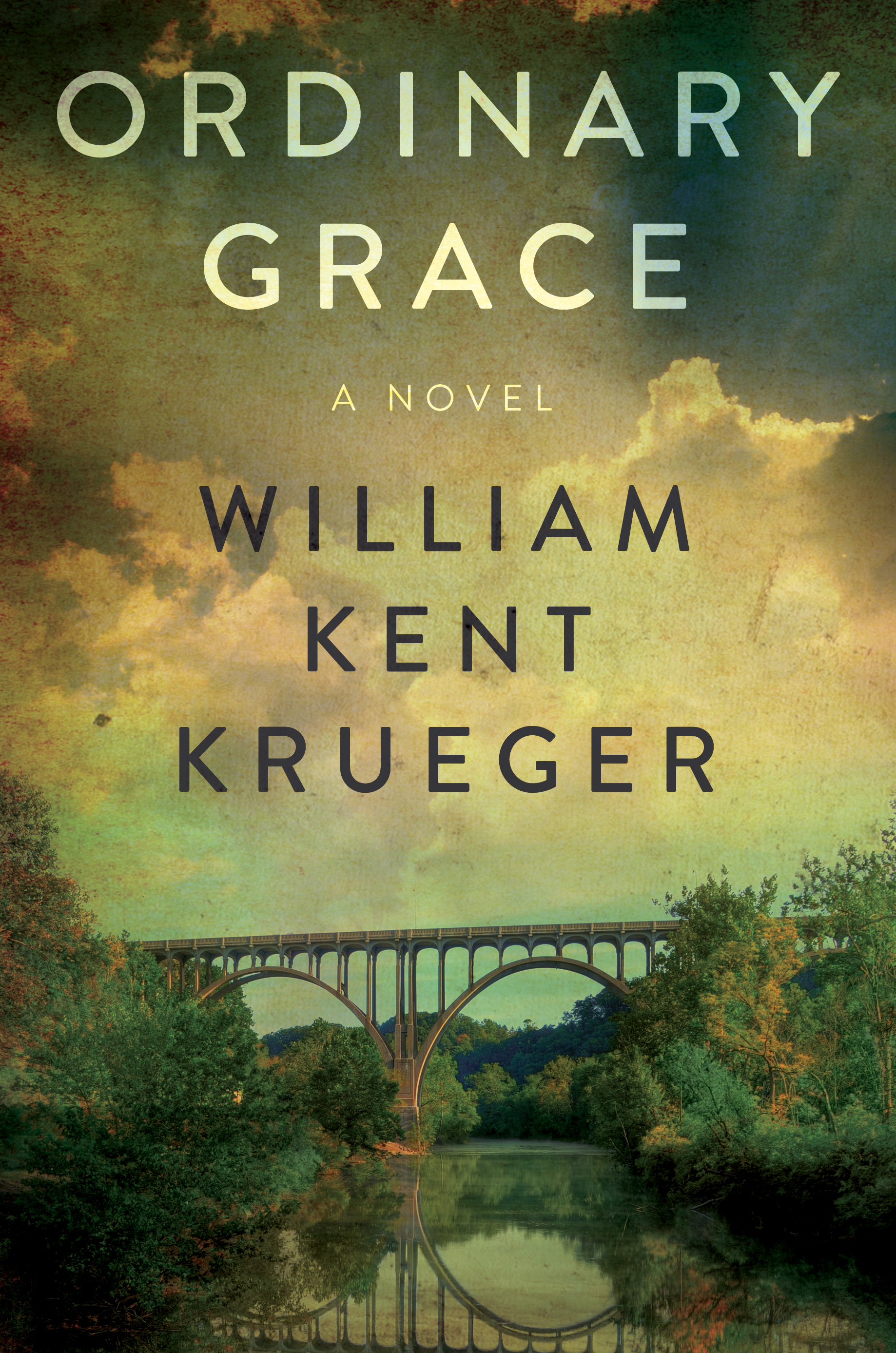
or a long introductory essay and a short review of William Kent Krueger’s novel, Ordinary Grace

ordinary grace coverI didn’t have an up close and personal brush with death until I was out of the seminary and in the parish for a couple of years. As a young adult, my parents, siblings, aunts and uncles, even all but one of my my grandparents were still living and he died when I was an infant.

Linda was a church member, a colleague, a kind-hearted soul who appropriately mothered my wife and me as we left school and entered “the real world.” We first met her as our real estate agent. We didn’t have a lot of money and my salary wasn’t going to be great, but at the suggestion of the senior pastor, we asked Linda to show us around and see what might be possible. With a positive, hopeful, and eminently practical frame of mind, Linda set out to show us what we could afford, and within weeks helped us buy our first home.

After that, I knew her as Sunday School superintendent, organized to the hilt, yet so tuned into the needs of the kids and the teachers. She and her husband attended church every week, and over the course of that first year, we also got to meet several of her five grown children. They all adored her; what I saw of Linda’s marriage was a couple still starry-eyed in love.

When she was first diagnosed with lung cancer, she almost brushed it off; just a couple of spots, she said. The doctors weren’t worried. But over the course of the next year, the disease proved to be extraordinarily virile. None of the chemotherapy had any impact, and the cancer multiplied and spread.

What made it so inexplicable was that Linda had none of the risk factors. She was born and raised a teetotaling Baptist. She didn’t drink and had never smoked. She exercised, watched what she ate, and was the picture of health.

She was home when she died, under the care of hospice. Maybe because I had visited so often those last weeks, I got the call early one morning that she had died. “Could I come?” her husband asked. When I got there, Linda was still in bed, her family gathered around; her youngest son who had just graduated from college, sat in bed with his mother in his arms rocking her and sobbing.

It was the first time I grieved the death of someone with whom I had had such a close relationship. It was hard and it was eye-opening. It wasn’t just the sadness of loss. It was the first time I experienced so personally what felt like the injustice and arbitrariness of death. Linda still had years to live and much to contribute. She was one of those people who made her corner of the world a better place. Her death didn’t fit into my comfortable, rational categories of how things were supposed to work out.

In the parish I serve, we average a little more than funeral a month. Most of them are not tragic in the sense of unexpected or untimely. They are sad; they represent loss; they bring folks face to face with the reality most of us work hard at denying, that is, we are mortal. Over the years, I’ve witnessed firsthand the broad spectrum of the ways people deal with death. I remember one woman with cancer who up until the very end was convinced there would be a miraculous cure. She forbad her family from talking of any other outcome. That was pretty hard-core denial. Other times, I have experienced the calm peace that can accompany death, standing with family around the bedside of the dying, singing hymns, praying, telling stories, and laughing the loved one across the river.  Some people draw strength from their faith, from their relationship with God, and from the promises of life in the midst of death. Others find in the sometimes sudden intrusion and finality of death their faith shaken to it’s core and can do nothing other than shake their fist at God for what feels like abandonment and capriciousness.

William Kent Krueger’s novel, Ordinary Grace is a beautiful, poignant story of life and the reality of death. The narrator is a grown man who tells the story, looking back on the summer of his 13th year, “a summer in which death, in visitation, assumed many forms. . .You might think I remember that summer as tragic and I do but not completely so.”

That narrator, Frank, is the wild son of the local Methodist preacher. The story opens with the report of the death of a classmate of Frank’s; it isn’t long before the reader is in the sanctuary where Franks’s father is conducting the funeral service for Bobby Cole. That same church and that very sanctuary become an anchor for the unfolding of the story.

In a sense, the story reads like a who-done-it, except without a detective. Mystery surrounds many of the deaths, and it’s to Krueger’s credit that you never quite know exactly how the deaths happened; accident? murder? something in between? The small, fictional Minnesota town is populated with enough odd yet believable characters that the reader ends up speculating along with the narrator about the whos and the hows of the series of deaths.

Where I think Krueger’s writing borders on the brilliant is the believable way he paints the variety of reactions to death. He allows for each of the characters, the families, and indeed, the town itself, to grow through the experience of loss to emerge on the other side of grief as someone different and wiser than before.

The story is, in fact, a long illustration of the quotation from the ancient Greek playwright, Aeschylus, a quotation that bookends the novel:  “He who learns must suffer. And even in our sleep pain, which cannot forget, falls drop by drop upon our heart, until, in our own despair, against our will, comes wisdom through the awful grace of God.”

Awful isn’t a word I often associate with grace. But this story has been yet another invitation to reflect on my own losses, struggles, pains, troubles, and sorrows. What I have experienced has been verified in the experience of others, namely that those times of suffering and pain have been transformational. And yes, brother Aeschylus, the places from which spring the fountain of wisdom.