Author Archives: Jim Honig

Unknown's avatar

About Jim Honig

Lutheran pastor in the western suburbs of Chicago. I'm a writer, a runner, an avid outdoorsman, and a curious student of people and the human condition.

My Shiva Is Over

blackYesterday, there was this line in the sermon that I heard: The memory of one shooting isn’t even distant before we hear reports of another.

That’s the thing that has occupied my mind and brought such a heaviness of heart for the past weeks.

Things have been pretty silent on this blog since early June. On June 1, I left for vacation in the Colorado Rockies. I had intended to keep up at least a posting a week.

Then Charleston happened. At first, I experienced simple disbelief, almost like my initial reaction on September 11, 2001.  As more details were reported, the tragedy became more and more shocking and horrifying. It numbed me.

The ink was not even dry on the first reports when the opinions started coming out about what caused it and what we should do about it. How quickly we turned to explanations and solutions. In those days following Charleston, because seemingly everyone was saying something, I felt compelled to say something. But I had nothing to say.

Maybe we say too much too soon, especially when these kinds of deep tragedies happen. In our collective problem-solving mentality, in our 24 hour news cycle that requires many words and images to fill the space, and when everyone is a pundit with an opinion, we seem to think that offering explanations and solutions will make everything come clean in the end. What happens is that nothing comes clean, but we numb ourselves into believing that it won’t happen again and nothing really changes very much.

In the Jewish tradition, when someone dies, there is a ritualized period of mourning. Here’s how it’s been described to me: first, there’s aninut, the death and the burial. It’s an all-consuming few days as the body is prepared for burial, funeral plans are made, and then the funeral and burial happen. Then there’s the shiva, a period of seven days after the burial. The mourners return home and sit on low chairs, taking a cue from Job’s mourning for his family when his friends sat down with him towards the ground for seven days and seven nights and no one spoke a word to him.  During this time, mirrors are draped in black and the mourner lights a memorial candle. The mourner wears no make-up, no perfume, engages in no sexual activity, listens to no music, and wears no shoes. During this time, family and friends call at the house. The mourning becomes a communal mourning with distractions stripped away. For this time, there are no explanations and there is no push to move on. The mourners sit in their lament, surrounded by family and friends. Lauren Winner writes that “what has struck me about a shiva call is the sheer crush of people.” (Mudhouse Sabbath) On the last day of shiva, friends come and take the mourner by hand, lead him out of the house and down the street for a walk around the block. It’s both the literal and figurative reentry into society.

I wish we could have a national shiva when something like Charleston happens. I wish we could shut off our televisions, ban anyone from writing anything about what has happened for a week or so, and just sit in collective lament. At least in the Christian tradition, we don’t do lament very well. We do funerals, but not lament.

It feels like we have a cultural diarrhea of words about why these things happen and what we should do; we get all riled up for a few weeks and then everything goes back to normal. When the Newtown shootings happened over two and a half years ago, we all thought that would be the game-changer in forming a society in which we would make sure that such mass shootings would be a matter of history. When Michael Brown was shot and Ferguson erupted, we pledged that things would change.

As far as I can tell, not much has changed.

I don’t know what to do. Big things like racism and violence in America are complex challenges and solutions are perplexing. My heaviness of heart and mind about both issues are close to despair, feeling in some moments like we will never get past this; this is our destiny; racism and violence are so embedded in our national DNA that the best we can hope for is to keep the beasts at bay.

Yet my faith is based on hope for what is not seen and even for what does not seem possible. My trust in God’s covenantal promises tells me that even in the midst of these societal Gordian knots, God is at work. Somehow I need to be part of that work, even though I haven’t wanted to say anything or do anything.

Last week, I went to our denomination’s national youth gathering — 30,000 high school youth descending on the beleaguered city of Detroit, bring their faith, their witness, their dollars, and their willingness to get into the trenches and work. It was exhilarating. And it was hopeful.

Apparently, that was my walk around the block. It’s time.

A Story from Gandhi and What It Means to Do Evangelism

Gandhi.jpgEvangelism was taken pretty seriously in my seminary training. The required class in evangelism was mostly about the principles and techniques of The Church Growth Movement.  The class also included a complete submersion baptism in The Kennedy Evangelism method, including a weekend at a local church in which we spent about 8 hours canvassing the neighborhood, knocking on the doors of complete strangers, seeking within about 90 seconds to get to some pretty serious and intimate conversation about faith.

The Kennedy method asks folks “the diagnostic questions.”  “If you were to die tonight, are you absolutely certain that you would go to heaven.”  If no, then “Well, I have good news for you. . .” and then one was to launch into the memorized speech that would give the ABCs of Christianity and would propel people towards conversion.  If yes, then one was to ask how they would answer God when God asked them why He should let them into heaven. Unless the response was faith in Jesus (which it almost never was), here was the other opportunity to launch into the speech that would save.

I didn’t like it back then. I attributed my discomfort to my introversion and uneasiness in talking with strangers. Almost 30 years later, I think it was due to something much more fundamental. It’s offensive; it is sanctified hucksterism that sees people as objects of a technique, not human beings whom we are called to love. 

Yet, it does honor the fact that Christianity is fundamentally a proselytizing religion. After all, the last words that Jesus gave his disciples in The Gospel according to Matthew, “Go and make disciples of all nations. . .”  And nearly the entire Acts of the Apostles tell stories of Peter and Paul on a mission to spread Christianity to the entire known world.

I wonder what evangelism means these days in the North American context. What does it mean to proclaim that salvation comes through Christ in the culture of 21st century America, a culture that increasingly eschews formal institutional religion for a self-designed spirituality that requires no connection beyond the self?

I’m convinced that question also has to take into account the sin-soaked legacy of Christianity from the very beginning of our presence on the North American continent. The Canadian theologian, Douglas John Hall, urges caution and humility on North American Christians who would engage in aggressive proselytizing, reminding us of multiple sins including the brutalization and near extermination of indigenous Americans, slavery, systematic racism, the exclusion of gay and lesbian persons, and the list goes on and on. No doubt, Christians have been the force for much good in the U.S., but unfortunately, the good can’t erase the legacy of hatred, oppression, and exclusion. Hall suggests that anything we say is liable to be contradicted by that legacy.

So, if the fundamental assumption of Christianity is true, that God is drawing all things, including all people, to fullness in Christ, that there is something good, salutary, and eternally beneficial to knowing God in Christ, then how does one go about the task of Christian mission without making it seem like a slick marketing campaign?

In Mohandas Gandhi’s autobiography, The Story of My Experiments with Truth, Gandhi recounts a number of interactions with Christians while he was working in South Africa. Most of them could be lumped into one negative memory of being put off by Christians whose sole agenda was conversion. As you might expect, he was particularly put off by those who tried to motivate his conversion with threats of perdition. “They would not leave me in peace, even if I desired to be indifferent.” 

By contrast, one interaction with a Christian couple was positively noteworthy and memorable. He wrote of a friendship with Mr. and Mrs. Spencer Walton. Walton was the head of the South Africa General Mission. The Spencers opened their home to Gandhi, and by all accounts practiced generous hospitality. Mr. Walton “placed his life as an open book before me, and let me watch all his movements.” He mentions this fact specifically: the couple never invited him to embrace Christianity. Yet their friendship kept alive his interest in religion at that time in his life. “We knew the fundamental differences between us. Any amount of discussion could not efface them. Yet even differences prove helpful where there are tolerance, charity, and truth.”

Relational evangelism is not something new. Simplified to bare bones, it goes something like this:  Befriend people who are not Christians (or not connected to the church). They will see your lifestyle and your relationship with Christ. They will want that for themselves and ask you about it. Then you can tell them about Jesus.

I certainly don’t mean to discount the fact that relational evangelism probably works. Heck, in many cases, the Kennedy approach “worked.”  Yet it still feels manipulative. It feels like a hidden agenda. It feels like setting up a good thing — loving your neighbor — as the means to an end — getting someone converted.

What if we are just called to love people without an agenda? Just because it’s the right thing to do. Truth is, Jesus spoke often of loving the neighbor. But it wasn’t the means to something else. It was the end itself. If loving the neighbor is the means to anything, it’s the coming of the Kingdom of God, which is not something we do anyway; it’s always something God does. So if loving the neighbor is instrumental, we’ll leave that up to God, just as we do conversion. And in light of our Christian the dark legacy of Christianity in North America, maybe this is precisely the kind of evangelism that is needed, simply to love people. Period. That is the whole thing.

I’m not sure yet how that squares with the Great Commission of Matthew 28. But maybe at least in our context, we ought to give some serious attention to the Greater Commission, love God and love your neighbor. For a few hundred years. And then we’ll see if we’re in a better position for more aggressive proselytizing.   

Heading Towards Haiti

HaitiThe view from the air as you fly into Port au Prince, Haiti, is starkly dramatic. If the skies are clear, you can catch a glimpse of the dramatic difference between the eastern half of the island — The Dominican Republic — and the western half of the island which comprises Haiti. While green to a degree, it’s a lighter color green than the dark, forested eastern half. Much of Haiti has been deforested.

As you descend into Port au Prince, you also notice the starkly different color of Port-au-Prince Bay.  While the water surrounding the island is a deep, beautiful, tropical blue, the water in the bay is brown, more like the Mississippi River than the Caribbean Sea.

In the aftermath of the European colonization of the Caribbean, Haiti became a French colony, heavily populated by slaves from Africa who worked the fields, especially sugar cane fields for the production rum. In the late 18th century, a slave rebellion kicked the French off the island, and the former slaves became the rulers. At the risk of a bit of oversimplification, the past 200 plus years of Haiti’s history has been the oppressed revolting oppressors who were formerly the oppressed.

The political history has been intertwined with an devastating environmental history.  From early on, charcoal has been the go-to fuel for cooking. Trees are necessary for the production of charcoal. Producing enough charcoal to keep up with the demand of an every growing population meant that over the years, more and more trees were necessary. Eventually, large swaths of the country were deforested, especially the hills and mountains directly east of Port au Prince. Haiti is a mountainous country; so, the disappearance of the trees stole the land of the anchor that held the topsoil in place, and eventually, the top soil eroded away. Hence, the brown color of Port-au-Prince Bay.

Haiti is one of the poorest countries in the world. Often left out of the explanation of such poverty is the historic destruction of the environment. In the 90s, when the church I was serving partnered with a school and orphanage in the rural area east of Port au Prince, we found villages of people trying to grow subsistence crops on land that had no topsoil and little nutrients for plants. One of our volunteers was a retired official from the US Soil Conservation Service and began a process of using compost and other organic matter to try to rebuild the soil. It was a process that at best would take years; and the villagers were not keen on changing the farming methods that they had been using for generations, even with the promise of more and better food. Haiti supports human life; but it’s not good life. It’s difficult life with dim prospects for much improvement.

Turns out Haiti isn’t the first place such disregard for the land itself has led to such devastating effect for the people who live there. In Earth-Honoring Faith, Larry Rasmussen tells the story of  how in 1942, Walter Lowdermilk wrote a report for the U.S. Soil Conservation Service documenting how the land of Lebanon, the Sinai Peninsula, Jordan, Syria, Cyprus, North Africa, and Greece had been seriously damaged leaving behind washed-off soils, silted canals, meager flora and fauna, and the ruins of dead cities.

The rapid degradation of the environment around the world — our gluttonous thirst for oil and dependence on internal combustion engines, our hunger for meat and vegetables produced by corporate agriculture, the mind-boggling consumption by consumers in first-world nations, and the list goes on and on — is repeating on a global scale the mistakes that were made in Haiti over a couple of hundred years, not to mentions mistakes that have been made in particular locations throughout history. We are unwittingly, and for short-term convenience wrecking the environment for the sake of the lifestyle we have become accustomed to. And we are unable or unwilling to recognize the cliff we are heading towards and do anything about it.

This week the Chicago Tribune ran a story about tiny Earlville, Illinois abut 70 miles southwest of Chicago in the midst of a controversy over whether to allow the construction of a transportation center for the trucking of mined sand for fracking.  Those in favor cite the jobs that will be created. They also look to the experience of a small Texas town that allowed the construction of such a transportation center; in exchange, the company built the town a football field. That sounds like a lousy trade-off. And the very definition of myopic vision about the precious planet we call home. 

For a person of faith, it’s a matter of wise stewardship of the planet we call home, of the faithful care of God’s good creation. For all of us, it’s an increasingly urgent matter of survival. Just look at Haiti.

At What Price?

tsarnaevBob and Marty had lived next door to each other for years. They had raised families, talked at the driveway, even borrowed each other’s rakes and shovels occasionally over the years. They weren’t friends, but there was at least casual good will between them.

One day, for no apparent reason, Bob throws a rock through Marty’s living room window. There’s no question. Bob did it. Marty saw it. Fritz across the street saw it, too. Bob was guilty.

So, what does Marty do next?  A) Nothing? Hope it doesn’t happen again?

B) Call the police? Press charges? Wait for the case to wind its way through court, hoping that at some point, Bob will be fined, forced to make restitution, and maybe even do community service?

C) Wait for an opportune moment to take not one, but two rocks, and throw them through Bob’s living room window, but also the dining room window, just to make sure he gets the message?

One might well ask the question, “What’s the point?”  What does Marty hope to accomplish in holding Bob accountable for his crime?  If the answer is to make sure Bob knows how egregious his crime was, then maybe C) is the best. If he wants the whole community to know how angry he was, how upset he was, and what kind of terrible impact the rock through his window had, then option C) might be the best. It’s It fulfills the emotional requirement. It’s makes the perpetrator pay. It fulfills that tit for tat, mathematical formula for crime and punishment.

If Marty were to throw the retributional rocks through Bob’s windows, he might feel an adrenaline rush, some satisfaction that now Bob knows what it feels like; he may even feel a bit of twisted pride that he went one better, breaking not one window, but two. But in the long run, Marty has done nothing positive for anyone. The retribution doesn’t take away the anger, it doesn’t bring back his window; it doesn’t erase the trauma of that original sound of breaking glass. In fact, it may even make things worse because now Marty lives in the fear that Bob may try to do him one better, and God only knows what that might be.

Really, none of the three options recognize the human relationship that is at stake regardless of what Marty chooses to do. Another way to say it is that Bob and Marty will be living next to each other regardless; they will be in community regardless. At some point, if there is to be any peace in either of their lives, they will have to face the breach in the relationship and reconcile. They will have to talk to each other. Making Bob accountable for his actions is only the very first and very minimal step in repairing the breach that a violent act causes between people.

The criminal justice system in the U.S. seems to be aimed overwhelmingly at one aspect of the equation, making criminals pay for their crime. Mostly, the payment is in time; you commit a crime, and we will take years away from your productive life. The worse the crime, the more years we will exact from you. We will make you pay. And if the crime is really bad or violent, then we will make you pay the ultimate price. We will take your life from you. It’s the ultimate expression of Marty throwing those rocks of retribution through Bob’s windows.

But taking years away from people’s lives does nothing to repair the breach. It doesn’t bring back the car that was stolen and turned into parts, it doesn’t restore the trauma that the bank clerk experienced at the holdup, and it doesn’t bring back the murdered victim. The only thing it does is somehow give us the impression that we have done something good and satisfying by making the perpetrator pay for his or her crime.

What I fear is that this obsession with payment — another word for vengeance — is rotting our national soul. We never have to pay any attention to the more important things, like healing breaches, like restoring community, like recognizing the inherent value of human life, even the life of the person who has committed acts of great violence that have led to great loss of life. There is still value in that human life.  In our push to make sure we punish criminals, to make sure the punishment fits the crime, to make sure the bad guy pays for his wrongs, we haven’t paid nearly enough attention to what vengeance is doing to us. How it’s making us collectively callous to the value of a human life. And how it lets us off the hook, brushing aside the hard, painful, but ultimately valuable work of reconciliation.

And I think that’s true, even for such egregious crimes as that of Dzhokhar Tsarnaev. He should not get the death penalty. No one should. Regardless of what he has done, he is human, and his life has value.

And there’s a bigger issue, a much more significant issue, an issue that affects all of us regardless of how many degrees we are removed from the Boston Marathon bombing. Our human community is much more valuable than the internal eating away of our soul that happens when vengeance is the only thing on our agenda.  Vengeance is not worth what it’s doing to us.

Have you ever heard this story?  A prayer was left beside the body of a dead child by a prisoner at the Ravensbruck Concentration Camp.  “O, Lord, remember not only the men and women of good will, but also those of ill will. But do not remember all the suffering they have inflicted on us:  remember the fruits we have brought, thanks to this suffering — our comradeship, our loyalty, our humility, our courage, our generosity, the greatness of heart which has grown out of all this, and when they come to judgment, let all the fruits which we have borne be their forgiveness.”

Let’s Make Earth Day Matter

plant in the riverEvery year, I face this internal dissonance on Earth Day. I’m conflicted.

On the one hand, I care deeply about the earth and all that dwells therein, and am deeply concerned about the current crisis of environmental degradation.  So, any attention paid to the crisis is a plus.

On the other hand, I fear that this one big splash a year leads to a sense of complacency, even for those who care. It goes something like this:  I care about the earth. Today is Earth Day. I’ll do something today, (like post a picture on Facebook), to show that I’m green.

And then tomorrow, we all go on as usual.  It feels a little like the environmental version of those who go to church on Christmas and Easter. I love having them there. I wonder what we could do together if it was a consistent practice rather than a one-day-and-done kind of deal.

So, I’d like to make a suggestion. Take this Earth Day 2015 make the first stop on a year-long journey. Decide that you will do something — even if it’s only one thing — to become better steward of the earth. Commit yourself to the practice with a long view, until it becomes not only a habit, but the way you live.

I’m actually going to commit to two things, both of which I’ve experimented with off and on, but haven’t made the commitment to the longterm.

First, I’m going to commit to keeping the car in the garage at least one day a week. My own driving habits, unfortunately have reflected our culture’s love affair with the automobile. The way I use my car suggests that I value convenience more than the stewardship of the earth. I live only 2.5 miles from where I work, and I can easily walk or ride my bike. And even if I unexpectedly need the care during the day, it really doesn’t take that long to get home for the car.

Second, I’m going to commit to a decrease in our family’s reliance on animal protein. The amount of land and resources devoted to the production of animals for human consumption in the US is not sustainable. It takes 11 times more fossil fuel to produce a kcal of animal protein than a kcal of plant protein. Part of my new commitment will be to go meatless one day a week, but part of it also is simply to decrease the amount of meat I use when I do cook with meat.

Too often and too easily I worship the god of convenience. I care about the environment, but it takes effort to act. If observing something like Earth Day is really going to make a difference, it’s going to be in the action. I’m making my commitment. What will you do?

“We Thought We Were in Charge”

dew featherI spent the past three days at the Institute of Liturgical Studies at Valparaiso University. The Institute is an annual conference that explores the intersection of theology, liturgical practice, and music. I always look forward to the Institute and have been attending since 1992. This year’s theme, Sing a New Song: The Cosmos in Praise and Lament, was of great interest to me. It did not disappoint. Larry Rasmussen, a social ethicist, Mary Louise Bringle, a hymn writer and professor of religious studies, and Ben Stewart, a liturgical theologian informed and challenged us in our vocation to care for the earth in deed and in worship.

I had the honor of preaching at the closing eucharist, a service in which we began to explore how liturgy might form us in our work of creation care. The following is the text of the sermon I preached based on 2 Corinthians 6:1-13 and Mark 4:35-41.

You think you’re in charge until you find out you’re not.

Like when you’ve reserved the bouncy house for the church picnic and encouraged all the families with their kids to show up, and it’s 30 minutes before the picnic is supposed to begin, and when you finally reach someone at Bouncy-Houses R Us, you find out they have delivered and set up said bouncy house at Grace Bible Church instead of Grace Lutheran Church. There is a certain terror attached to that scenario, a certain panic, in the long run not that important, though beads of sweat still break out on my forehead when I tell the story.

You think you’re in charge until you find out you’re not.

Like when you get into the boat with Jesus and you’re the fisherman and it’s your boat and you know how to sail this boat and these are your home waters and you know them like the back of your hand and even though it was Jesus idea to go across the sea, it’s your boat and you are in charge. Until you find out you’re not.

When crisis hits, like a storm on the Sea of Galilee, you discover what was really true all the time, that you are not in charge. The winds begin to blow — hard — the waves become overpowering and begin to swamp the boat. And you, wise, experienced, sailing-savvy fisherman see death staring you in the face, because you know that in this moment, the wind and the sea are in charge, and they hold the power of life and death.

The disciples reach out to Jesus in a panic. Not, I believe, a cry of hope, but overlapping cries of irritation, frustration, and desperation.

The terror-stricken disciples have come face to face with the fact that they are not in charge; by all appearances those life-threatening forces of nature are. And then everything changes. Stuck in the jaws of death, they discover that the one in the boat is more in charge than they know. Waking up from sleep, a simple, commanding word from Jesus calms the winds and the waves.  Jesus is the king of the created order. There’s nothing to fear. He rebukes that which threatens life; his word gives the peace that it calls for.

When it comes to life on this small boat of a planet, a boat increasingly storm-tossed— figuratively and literally — just who is in charge?  For a couple of centuries, we’ve believed and acted as if we are. We’ve been quite impressed with our capacity to harness the unpredictable forces of the natural world and steer them according to our wants and needs. It’s been like grabbing hold of the steering wheel of a great planetary BMW M5, a little crazy at times, but exhilarating, the ultimate driving machine.  This exhilarating drive of economic and technological progress, fueled by an astonishingly rapid burn of fossil fuels has led to a life of ease and convenience for those of us in the room, though not for everyone on the boat, certainly not those of the empty chairs [a reference to Dr. Larry Rasmussen’s plenary session on Tuesday, April 14, at which he placed 3 empty chairs on the podium to represent those impacted by climate change who have no voice, namely, the poor, the creatures, and the earth itself]. Until very recently, we thought it could go on forever.  You think you’re in charge until you find out you’re not.

We have let loose a destructive genie that can no longer be put back in the bottle. We — not just the corporations and governments and systems and other easy punching bags that we like to take our swings at — all of us, thousands upon thousands of us with our thousands upon thousands of daily decisions betray our bowing down at the altars of different gods, gods of consumerism and materialism and convenience, a worship that is killing the planet. In a creation full of life, we have been agents of death, because we thought we were in charge.

We should not be surprised. Holy history has shown us that being in charge is a burden we strive for but cannot bear. When we claim control it leads to nothing but death. Our first parents wanted to be in charge of the Garden and so came the fall and the curse. The Children of Promise wanted to be in charge through the 40-year journey to the Promised Land, repeatedly unwilling to trust God’s provision and repeatedly victims of their own rebellion.  Oh, the tragic and painful truth embedded in the first words carved on the stone tablet: you shall have no other gods.

Those words spoken from the boat changed a precarious situation for the disciples in the boat with Jesus. But only for that moment in time. What changed everything for all time and all eternity, was not a word, but a sorrowful and painful silence.  Not in the stern of that wooden boat, but on the wooden crosspiece of a cruel tree came the silence of the dying one as he breathed his last, and the horrifying silence of abandonment. The silence of his death was the death-knell to death itself. Redemption was accomplished and reconciliation begun in his self-giving love. The empty tomb is the exclamation point to God’s lively intentions for you, for us, and for all creation.

Before this little boat ride, the disciples were students at a hillside seminar on faith, illustrated by a series of folksy stories. Now, after the storm, Jesus asks some penetrating questions about the relationship of their own experience in the boat to faith. Why are you so afraid? Jesus asks. Why do you have so little faith?

Faith is the gift of trust within a properly ordered relationship between Creator and creature. Faith is the gift of knowing that the Creator, the one who has given us life in the Crucified and Risen One is faithful. Not only does that faith cast away the fear that is at the heart of wanting to be in charge, it changes our perspective on and relationship to everything, including our work for the care of the earth. The ones in charge say, “This is a commodity. How can it be used?”  Faith says, “This is a sacred gift. How shall it be cared for?”  Faith issues in eucharistic living, giving thanks for the goodness of the One who has given life, who has given new life, and who now empowers a new way of living. Thankful for this gift of life, we cannot help but be agents of that life for all our creaturely neighbors, even for this holy Mother Earth herself.

Now, let’s be clear; we do not sing a song of progressive optimism that ignores the challenges and say that things will just keep getting better and better. Our song and prayer will often be lament.  Paul had a wide-eyed honesty about the difficulty of his work for the sake of Christ. Persecuted, abused, sorrowful, empty, even dying. Yet, in the midst of that struggle, Paul exudes a confident hopefulness, even joy as he gives his life to his holy work.  The work is hard; it is urgent. But eucharistic living knows no other way; not complacency, apathy, or even resignation to a future that holds only death. Eucharistic living works, loves, and cares, for God’s sake and for the sake of all our neighbors.

Eucharistic living flows from the table to which we will soon be invited. The bread and wine which we will offer is the stuff of the earth. The bread and wine come to us as gift of the Creator.  Shaped by our hands, we offer them for God’s use. By God’s word and promise, we receive this stuff of the earth as the gift of salvation. And then we offer ourselves back to God. It is a properly ordered, grace-filled  relationship — Creator, creature, Christ the Mediator offering himself to us yet again. Then we will go from that table to the table of the world, recognizing in the earthly things a sign and sacrament of a loving Creator. What happens here becomes the pattern for what happens out there, reverently, lovingly, graciously and gratefully receiving the things of earth and offering them back to God.

At Faith Church in Glen Ellyn, as part of our formation for our young brothers and sisters to receive Christ in the Holy Communion, they are asked to reflect on that experience of receiving communion. “What will be different for you now that you will be receiving communion?” they are asked. The question is remarkably similar to the question Fred Niedner asked us at the end of the final plenary session, “What difference will it make that you were at this Institute,” and I might add that you have been in this assembly, at this font and this table? Let me tell you how one of our fifth grade theologians answered that question.  “Now I won’t just be hearing the story, I’ll be in the story.”

Why We Should All Care about the California Drought

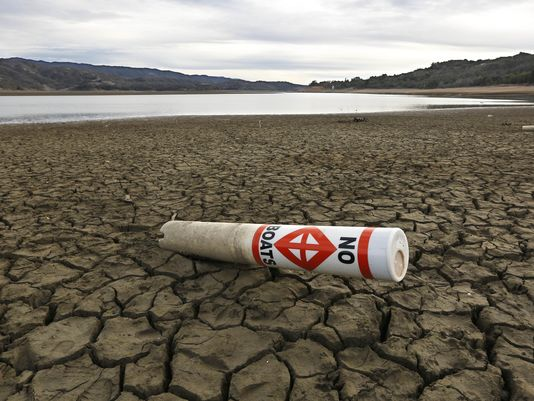
california drought.jpgYesterday, an op-ed piece  was printed in the Chicago Tribune that has gotten under my skin. It was about the California drought; I think the author was intending a little humor. I didn’t think it was funny.  Humor at it’s best helps uncover the truth, and the author seemed to be pushing the truth that we can distance ourselves from the water crisis in California.

The gist of it was this: all winter long, Californians gloating over their pleasant, balmy, shirt-sleeves weather while we in the middle west are suffering in the deep freeze.  Now, the author suggested, we can turn the tables on those braggadocious left-coasters:  “So, how’s your lawn looking these days?” “Guess what I did this morning? I took a 30 minute shower.” (You can read the op-ed for yourself here: http://www.chicagotribune.com/news/opinion/commentary/ct-spring-chicago-california-perspec-0407-20150406-story.html)

But I think this little yuck- yuck is insidious at it’s heart. It presumes that we can segregate and regionalize our crises. “What happens in California doesn’t matter to me; I have plenty of water.”  Pretty soon we’re extending the principle: “the mining of sand along the Mississippi River in Wisconsin doesn’t matter to me; I can’t see it from here” or “the oil spill in the (you name the river) doesn’t matter to me; I don’t live there.” As long as it’s not happening in my backyard, then I don’t need to be all that concerned about it.

There are a few practical reasons why the drought in California should matter to us in the middle west.

  • A disproportionate amount of fruits and vegetables come to our tables from California. A lot of what we eat and drink is at risk. If the drought persists, that supply will shrink and what is available will be much more expensive.
  • The water shortage is likely not going to go away, and neither are the almost 39 million people who live in the most populous state in the U.S. They will get water from somewhere, and as time goes on, it will come from further and further away.
  • Climate change scientists are suggesting that what’s now happening in California is merely the pre-cursor to something that will be happening on a much larger scale in other parts of the country, including the middle west. Gloating over the abundance of water may be short-lived.

But I think there’s something much more substantial at stake here. Something fundamental, spiritual, theological, if you will. We are all connected. We’re all in this together. The land that is California is the same as the land that is Illinois. It’s a single, unified creation. People identified as Californians are of the same human family as the people identified as Illinoisans. Whatever borders we create are artificial bureaucratic structures that create misleading divides among the family. When the middle west experiences abundant harvest, the plenty ripples far beyond the narrow Great Plains geography. And when creation is in travail in California or in The Philippines or at the Arctic Circle, then we all share that travail. Part of the stewardship of my life as a follower of Christ is the stewardship of creation, not just the little postage stamp that I live on, but all of it. The small things I do to conserve or waste inevitably have in impact on my brothers and sisters, not to mention the created order, around the world. We are all connected. Which means that my carelessness or wastefulness is stealing from the life of another.

I learned something of the stewardship of the land from the farm families I grew up around. A good farmer doesn’t just steward the land that he can see from his kitchen window. He takes care of the whole of his farm, all thousand acres. And in fact, he cares for his own land in a way that he doesn’t cause harm to his neighbor and his 500 acres. And both he and his neighbor take care of their land in a way that benefits his neighbor’s neighbor and her 2000 acres, because they all know that while fences and legal documents define boundaries between his farm and his neighbor’s farm, it’s all the same land. For everyone to be cared for, all of it has be be cared for well.

So, there’s no room to gloat over our abundance of water here in the backyard of Lake Michigan. Instead we ought to be caring for the abundance of that resource as if the California drought was ours. Because, after all, it is; we’re all connected.

Which Jesus?

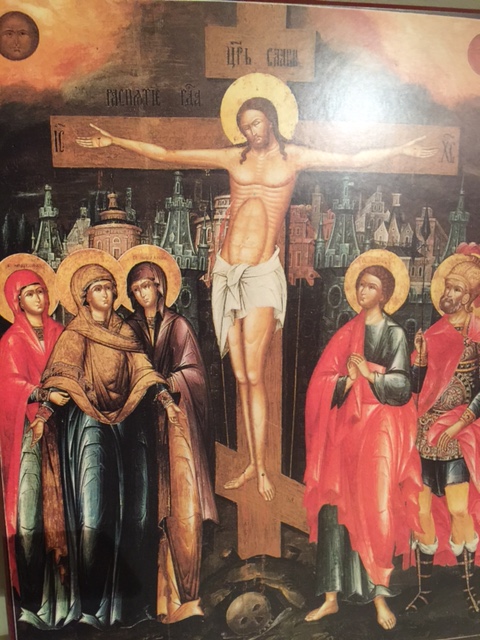
Jesusicon

As young associate pastor in St. Petersburg, Florida, I served at a large Missouri Synod church out in the western part of the city by the beaches. We used to have regular meetings of all the Lutheran clergy in the area, both Missouri and ELCA. One of the the guys who was almost always there was Priit Rebane, an older pastor who served the historic ELCA church in downtown St. Pete. I had the greatest respect for Priit.  He was soft-spoken, theologically astute, and to me, simply oozed pastoral wisdom out of very pore of his being. Priit was the kind of pastor I wanted to be some day. At one of our meetings, he told a story. (Priit, if you ever read this, I hope you’ll forgive inaccuracies; it was 25 years ago, and the particulars are a little fuzzy, but this is how I remember it.) He told about coming out of the seminary, ready for ordination.  He had learned all the theories about the virgin birth, about the resurrection and whether it happened or not, the various criticisms of scripture. By his own estimation, he was a young theological hot shot, headed out into the parish ready to unleash all his learning on some unsuspecting parish. His grandmother sat him down and told him, “Priit, just tell them about Jesus.”

At our Night Prayer service last night, we read from the Gospel of John about some Greek seekers who asked a couple of Jesus’ followers to introduce them. “We wish to see Jesus.”

For those gathering in devotion this week, it’s easy to see ourselves in those wanting to get more of Jesus than a mere glimpse. In our bones, in our souls, to the depth of our being, we understand that what’s happening this week is at the center not only of the Christian faith, but of our own lives with God and of our life together as a community of faith. So, we want to see Jesus.

But what should we tell one another and the world about Jesus this week? In all the conflicting reports of who Jesus was, what he wanted, and what he was trying to accomplish, it doesn’t appear to be as easy as, “Tell them about Jesus.”  By all estimations, he was a good man, a good teacher, a miracle worker, gave his followers an example to follow. Some would argue even that he was a zealot, or a gentle man who inadvertently got caught up in the politics of the times.

In his own words, Jesus invites us to see something different. Last night we read how, as he approached his own impending death, the image he wanted people to behold was his being lifted up, his moment of glory (John 12). He invites us to view the culmination of his whole ministry, the work that he came to do. He invites us to see his enthronement as king of the universe.

Yet that glorification comes as he ascends the throne of the cross. In that cruel, paradoxical enthronement, we are invited to see that in his death life came to us, that his crucifixion removed the barrier of sin and brokenness that stood before a loving God and a fallen humanity and creation.

“And I, when I am lifted up, will draw all things to myself.”  That’s the thing. In his death, he was drawing all people, all things, into the restored unity of God’s love and grace, God’s purpose for the whole world.

I think that’s pretty important in these days when too many of us who identity ourselves with Jesus are seeking to create divides — between the good and the bad, the sinners and the righteous, those who get it and those who don’t, those who stand for biblical values and those who don’t, those who welcome and those who don’t, those who are racist and those who aren’t, those who are Christian and those who aren’t — to pause for a moment and realize that we’re getting it way wrong. His intention was not to create divides, however well-intentioned we might be. His intention was to draw us to God. All of us. Period.

Maybe that’s the Jesus that Priit’s grandmother was looking for. It’s the image that I hope gets burned into our being this week, the image that gets so seared into our minds and our hearts that it starts to issue in the way we behave. That would really be something.

Into the Streets

ethiopiancross.jpgIn my life and in my vocation, I am deeply committed to the Christian Church and what it stands for. I find deep meaning in the understanding of that a life with God comes to us through the life, death and resurrection of Jesus. I also find meaning in many of the rituals, symbols, and traditions of the Church.

I also stand as an insider looking out on a world that seems increasingly uninterested. It feels like being the proprietor of a shop that only sells winter clothing in the middle of May. I know what I have is useful, but no one seems very interested, at least not right now.

Recently my wife and I had lunch with a couple who recently retired and has spent a good portion of the last year traveling.   The wife grew up in a Jewish family; it sounds like she does not particularly practice her Jewish faith, nor her husband’s Christianity. She said, “I have not felt particularly drawn to Christianity.” With passion and intensity in their voices and a sparkle in their eyes they told us about a recent trip to Ethiopia. I wish you could have heard her describe their participation in the Epiphany celebration of the church in Ethiopia. Epiphany is perhaps the most important celebration in the Coptic Church, the time when they celebrate Christ’s birth. The celebration has the people dancing through the streets in procession to the church. The people are all dressed in white, many of them in robes; they carry crosses decorated with colorful fabric, and they twirl colorful umbrellas, part of their liturgical decoration. She told about how they were invited into the procession, joining with the Ethiopian Christians in their singing and dancing through the streets of the town; they were a bit of a novelty as the only white faces in the processional crowd. When they got to the church, she was hot and tired, and found a place to sit just outside the church door. One of the priests came and sat next to her and engaged in conversation, taking delight that she lived in the midwest, where he had spent time in theological training. She was dumbfounded that on this most important day of his religious year, a time when he clearly had many things to think about and do, he would take the time to engage in conversation with a stranger he would likely never see again.

As a token of their visit, she bought a cross pendant. She said, “I feel a little funny wearing a cross around my neck, but in that moment, I was drawn to Christianity.”  That Ethiopian Christian cross had become for her a sign of life, not as a generic religious symbol, but as a reminder of the warmth and hospitality she had experienced.

I find a pretty striking lesson for me in my own life as a Christian and as a pastor in the church. The theology, ritual, and symbol that I find so meaningful will not likely be meaningful to anyone outside the church unless and until they experience the love and grace of God embodied in the warmth and hospitality of people like me. Fewer and fewer of them are coming onto our turf to give us a chance to demonstrate that love and grace. The chances are slim that it will be through Epiphany celebrations that wind through the streets of our communities. But it will be important (dare I say essential?) that we find our own ways to get the Body out of the building and into the streets.

Reflecting on the Flood, Part 2

rushingwater1In this space last week, I reflected on the story of the Great Flood, suggesting that, above all, it’s a story about God and not about floods and geology and arks and animals. In that post I argued for a view of God that is based, not on God’s anger, but God’s grief over human sin.

When we get to the other side of the The Great Flood, Noah and his family have been spared and God makes a promise never to abandon that which God has created.

One of the startling reports from the Genesis text is that before and after, nothing has changed on the part of humanity. Before the Flood, God “saw that the wickedness of humanity was great in the earth.” (6:5); after the Flood, God still makes the same judgment, “for the intention of man’s heart is evil from his youth.” (8:21)  The cataclysm of a great flood has done nothing to change the inclination of humanity to rebel against God’s purpose and will. If there is any hope for the future, it will not be found in any change in the human heart apart from the touch of the love and grace of God.  Hope for the future depends on God doing something. Human beings are not, apparently, capable of saving themselves. We cannot, in the end, rise above our calculated self-interest.

Yet this humanity that has been created in God’s image is still regarded by God as good. God yet gives an affirmation about the value and the dignity of human life and human work. “Never again,” is what God says. (9:11)  What has changed is not anything in the human heart. What has changed is the heart of God.

What has also changed is the formula. We seem to be hard-wired for a formula that says wrongdoing must exact a proportional punishment.  An eye for an eye, and all that.  But in the Flood story, God breaks the one to one connection between guilt and punishment. Death and destruction are still real; evil has not disappeared. But after the Flood, death and destruction are no longer rooted in the anger of God, and they are not God’s necessary and inevitable response to wrongdoing.

These reflections are particularly timely for a couple of reasons. First, in the church, we are coming close to the annual Holy Week commemoration of the events of Christ’s last week, culminating in his crucifixion, death, and resurrection. I still hear, far too often, about Christ’s death as the punishment wrought by an angry God for the sin of humanity. It’s just not a helpful way to talk about or think about Christ’s death, nor is it consistent with the picture of God that courses through Scripture, going all the way back to what we learn about God from from the Flood.  Christ’s death and resurrection certainly bring salvation to all humanity, but not in the one-dimensional “payment to an angry Father” schema that is so pervasive in popular western Christianity.

Second, I think it’s particularly important to say in a world where violence and retribution hold sway. The picture of God presented here, a picture which finds its fulfillment and sharpest focus in Jesus, offers another way for us to live together. It is not necessary that punishment be meted out in proportion to the crime, especially when punishment is not a deterrent, and when the drive for punishment completely overshadows any thought of rehabilitation. The current world stage is as much proof as we need that retribution solves nothing; in fact, it serves to escalate the violence and increase the suffering and death of mostly innocent people.  Early yesterday morning, two police officers were shot outside the Ferguson, Missouri City Hall. Retribution? You kill one of ours and we’ll kill one of yours?  Who knows? We still haven’t shed our tendency toward violence and bloodshed; it must still grieve God.

For all of that, I’m grateful to be on the receiving end of a gracious God and still hope that in the peaceable kingdom that is coming in our midst, the same grace might have something to do with how we live with each other.