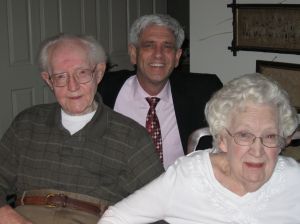
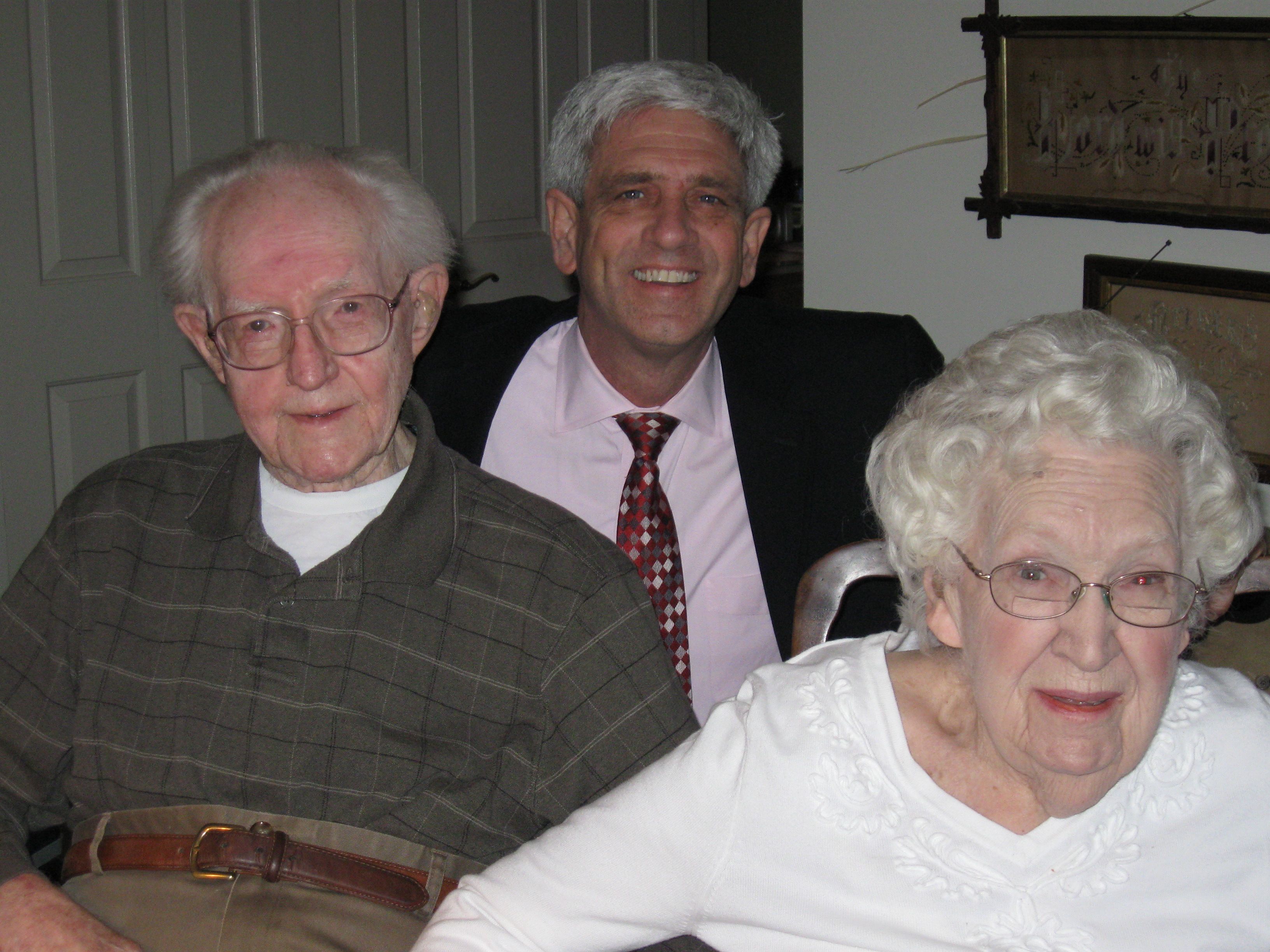
In February, 2013, I wrote a blog post chronically the plight of one of our member couples who, in their 90s, were forced to move from one retirement center to another an hour away from their community, and all because their money was running out.
Things Don’t Always Work Out
Paul died in April, 2013. Faye died on Memorial Day this year. The following is the sermon I preached at her memorial service yesterday.
As I’ve reflected over the past couple of weeks on Faye and on her life and on what became over the past dozen years a very special and unique relationship between a pastor and a parishioner, what has come to my mind so often is an old liturgical verse that my friend, Mark Mummert, has set to music.
(Sung:) All of us go down to the dust; yet even at the grave we make our song. Alleluia! Alleluia! Alleluia! Alleluia!!
When I came here in 2002, Faye was already 83 and while still vibrant, still very active, still working, the signs of death and decay had set in. Her beloved Paul had already begun his long struggle with dementia. For Faye, this meant an extra level of care, care about which she was the very model of love and faithfulness. Years later, she faced the reality of leaving their home and independent living. It was an agonizing decision that her head told her was right and her heart resisted with every fiber of its being. In the end, she decided that she and Paul would leave their home on Vine Street and move to The Meadows. It was so hard because Faye loved that house and she loved that neighborhood and she loved her neighbors. And of course, she loved that it was so close to Starbucks.
Then there was Robert’s death to cancer (he died in his mid 60s), a death that hit Faye very hard. Finally came the move to Alden and Paul’s death a little over a year ago.
. . .yet even at the grave, we make our song.
The way Faye lived was almost as if to defy death and to push death away. There was, for instance, that regular, everyday 3:00 ritual of the drive to Starbucks for a cup for coffee and a pastry.
When they moved to The Meadows, Faye could not have her home, but she was determined that their small living room would retain as much of the character of their home as possible. She had brought along a few of their best living room and dining room furniture and it was tastefully adorned with a few sentimental pieces and framed photographs. When I came to visit, she was always dressed up as if the President was visiting. She was a dignified and classy lady.
Just before the service today, I was saying to Ken (surviving son) how fitting it was that this service is in this room. She loved this place; she loved this room. She would bring Paul to church every Sunday. She loved the services, the music, the preaching, the liturgy, but she loved just as much the opportunity to be around people, to bask in the love and care of those relationships that had been formed and cemented over decades of being a part of the same faith community.
And there was our Thursday morning bible study. In think in the beginning, she brought Paul because he had been the one to relish bible study. When I first came to Faith, there were two Thursday morning bible studies, one for the men and one for the women. If I remember correctly, she used to drop Paul off, do some errands, and then come back an hour later to pick him up. But then when we combined the two groups, she stayed and sat next to Paul, helping him find the passages and so on. At least in the beginning, she was just along for the ride. But that time and that study became extraordinarily important to Faye, and our time together in bible study fostered some very rich and meaningful conversation about God and faith and the church and life in this world and about death and what comes next. These were honest and rich conversations. They became the basis for a deep and meaningful relationship.
Faye was smart; she was strong; she was classy; she was elegant. And she was full of spunk. She loved her Paul with a devotion that I have rarely witnessed. She loved her sons and her daughters-in-law and her grandchildren and extended family. She deeply loved her church and her friends there. How often did I hear stories about the 4th Nighters? She loved Glen Ellyn. She should have worked for the Chamber of Commerce. Maybe part of that was that she loved the roots that she and Paul had put down here. She loved her work and all the relationships she build through that work.
See, even in the midst of all the struggles and the slow approach of the grave, Faye loved life. She was grateful for the good life that she and Paul had had. She simply love life. She loved life as an Easter person would love life. Faye’s song was Alleluia!
We used to talk about death and about what happens after death. Those conversations happened first in the days after Bob’s death and then again after Paul died. Faye could never quite accept the Sunday School notions of heaven with jewel-studded mansions and streets paved with gold. What she took great comfort in was the notion of life. Because she loved life so much, the prospect of a new and rich and eternal life with God brought great comfort. It’s the kind of life described in the lesson we read from the Revelation of John. (One of the texts for the memorial service was Revelation 22:1-5.)
John paints a picture that is far too often taken as a literal description of heaven, a misunderstanding, I believe, of the purpose and intent of that vision. Instead, John gives us a sense of what this new and eternal life will be like. It will be full. It will be refreshing. It will be the laying down of burdens and disappointments and sorrows and regrets and pain. There will be healing, not just for the physical ailments that characterize our long, slow slide into the grave, but healing of all that has ever stood as an obstacle in our relationship with God and with each other. Everything accursed will be no more.
And we will see God. And we will see God. And we will see God.
And we will bask in the everlasting light of Christ, the One who came to show us God. The One who came to bring us God’s love and grace and mercy. The One who knows us as only the Good Shepherd knows us. (The gospel lesson was John 10:11-18.) The One who carried our burdens and our sins to the cross and then buried them in that garden tomb. The One who rose again as the assurance that neither is our grave, neither is Faye’s grave, the end of the story. That One, that One, invites us, as he has invited Faye, to bask in his light and enjoy that life that will not end.
And, so, Death, Grave: you are not the end of the story. Death, Grave: you are not the last word. Alleluia is the end of the story; alleluia is the last word.
(Sung:) All of us go down to the dust, yet even at the grave, we make our song. Alleluia! Alleluia! Alleluia! Alleluia.
 I’ll admit it; when The Star-Spangled Banner was played before yesterday’s FIFA World Cup match in the heart of the Brazilian rain forest and those 20,000 American fans sang at the top of their lungs, tears welled up in my eyes. That song and that setting touched a tender place in me, a place that has something to do with my love for this country and what it stands for. I get some of the same feelings when I see flags popping up on lawns this time of the year, just as surely as the tulips popping out of the ground in May.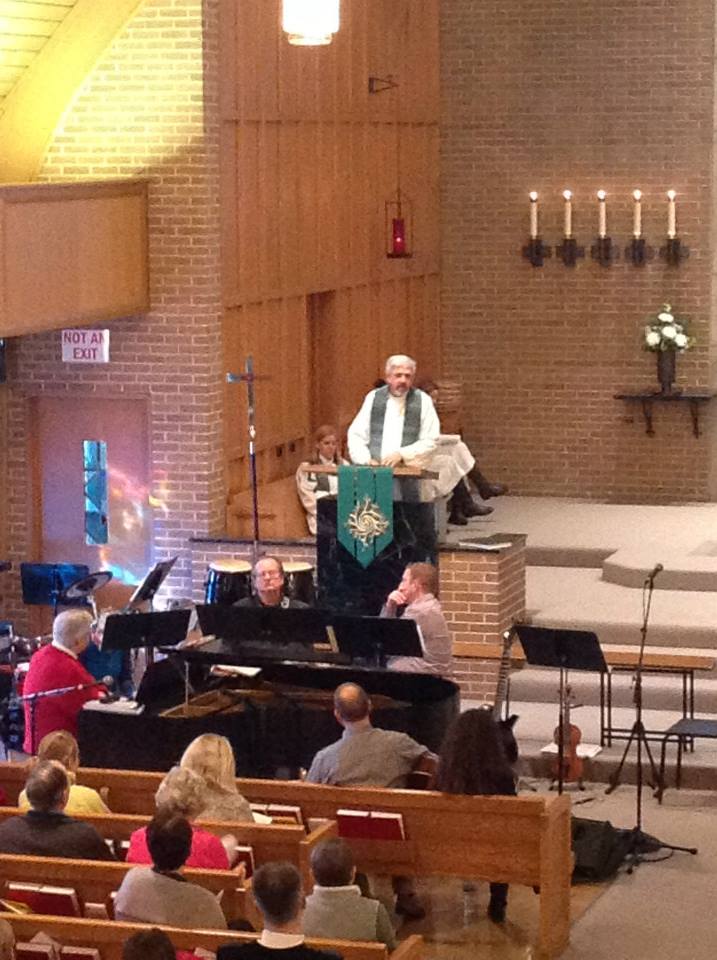

 James K. Honig